

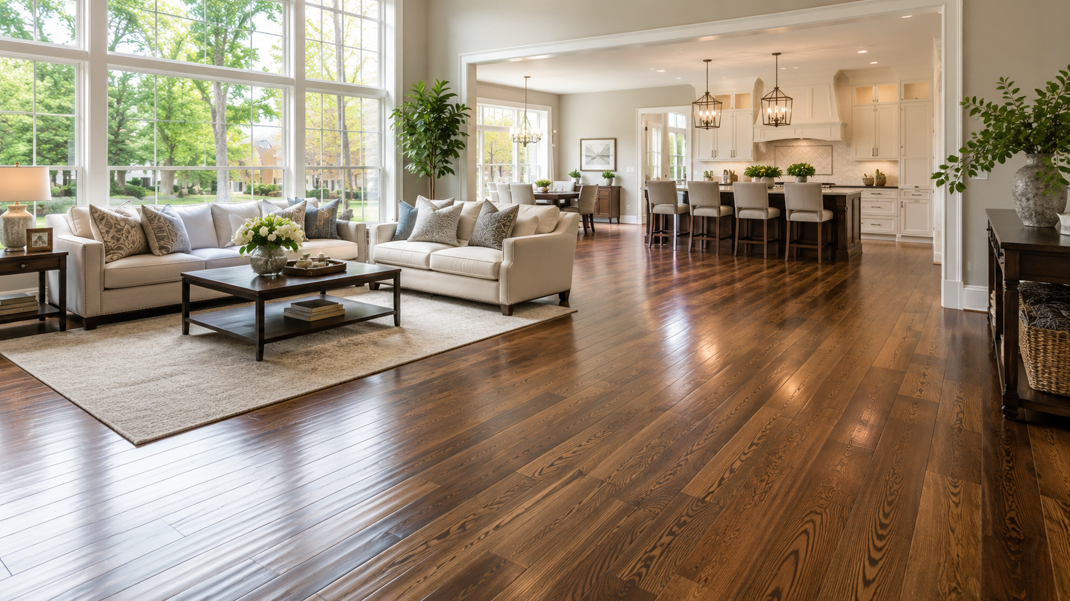
Hardwood has a way of setting the tone for an entire home. It can make a living room feel warmer, give a dining space more presence, and create a clean visual connection from one room to the next. In Bloomfield Hills, where homes range from traditional properties to highly updated contemporary interiors, that versatility matters.
Proximity Mills hardwood is worth a closer look for homeowners who want real wood character with a broad range of visual options and performance-focused choices. The brand currently offers hardwood in multiple species, colors, textures, and finishes, so the decision is less about finding “a hardwood floor” and more about finding the version that fits your rooms, lifestyle, and design plans.
For local homeowners, the buying experience matters too. Urban Floors gives customers access to hardwood options, showroom guidance, and at-home sample viewing, which can make it easier to compare flooring against existing cabinetry, paint, furniture, and natural light.
So, why consider Proximity Mills hardwood for a Bloomfield Hills home? The strongest reasons come down to quality, finish, design flexibility, and practical fit. A good choice is not simply the most dramatic sample on a display board. It is the floor that still feels right after the room is furnished, daily life begins, and Michigan’s changing seasons put the space through its normal routine.
What Makes Proximity Mills Hardwood Worth Considering?
A hardwood floor can look impressive in a small sample and still be the wrong fit for a particular home. It helps to look past color first and consider how the product is constructed, finished, and intended to perform.
Quality Starts Beneath the Surface
Construction affects stability, installation options, and how the floor responds to everyday conditions. Solid hardwood is one piece of wood through the plank, while engineered hardwood uses a real wood surface over layered construction. That layered structure can provide greater dimensional stability as indoor conditions change. Urban Floors also notes the broader installation flexibility engineered construction can offer.
Neither construction is automatically right for every home. The room, subfloor, installation method, and manufacturer requirements all matter.
Product Details Matter More Than Brand Recognition Alone
Proximity Mills positions its hardwood range around performance as well as appearance. Its current hardwood catalog includes a variety of wood visuals, textures, and color families, and some collections carry additional performance claims such as waterproof or pet-scratchproof protection. Those features vary by collection, so homeowners benefit from checking the exact specifications of the product they are considering rather than assuming every plank in the brand performs the same way.
Two floors from the same brand may suit different priorities. One household may care most about a low-gloss look, while another may focus on pet activity or a finish that helps disguise small marks.
Look at More Than One Board
Natural wood is valued partly because it is not perfectly repetitive. Grain, tone, knots, and character can vary from plank to plank. A larger display can help you judge whether you prefer:
Low variation for a calmer, more uniform appearance
Medium variation for balance and natural movement
Higher variation for a more expressive, character-rich floor
There is no universal “better” level of variation. The right choice is the one that complements the architecture, furnishings, and level of visual activity you want in the room.
Finish, Color, and Character Can Change the Entire Room
For many Bloomfield Hills homeowners, the hardest part of choosing hardwood is not deciding whether they like wood flooring. It is narrowing down which wood look actually belongs in the home.
Start With Undertones, Not Just Light or Dark
It is easy to describe a floor as light brown, medium brown, or dark brown. That is only the beginning.
Wood tones can lean warm, neutral, golden, muted, or deep and dramatic. Those undertones interact with cabinetry, trim, stone, countertops, fireplaces, and wall color.
Warm floors can feel cohesive with cream, beige, and natural wood finishes. Neutral tones can calm a room with several materials, while deeper shades can add visual weight. Compare samples directly against finishes that will remain in the home.
Think About the Whole Floor Plan
Open layouts make flooring decisions more visible. If the same hardwood extends through a foyer, living room, dining area, and hallway, it becomes one of the largest continuous design elements in the home.
Consistency can create a calmer, more connected look. If different flooring materials meet, the transition feels more intentional when the tones relate to one another.
Homeowners exploring hardwood flooring can compare styles with the bigger picture in mind rather than choosing one room in isolation. Consider sightlines from the front entry, how the floor meets kitchen finishes, and whether the color still works in both bright and shaded parts of the house.
Plank Width Changes the Visual Scale
Plank proportions influence how a room feels.
Wider plank visuals often create a more expansive, contemporary impression and give the grain more room to show. Narrower or more traditional plank proportions can feel especially natural in classic interiors or spaces where architectural detail already carries a lot of visual interest.
Room size is only one factor. A smaller room can still suit a wider plank if the color and layout feel balanced.
Sheen and Texture Deserve Attention
Finish is not a minor detail. It changes the way light moves across the floor and how the surface looks during daily use.
Lower-sheen finishes often feel relaxed, smoother finishes can look more polished, and textured surfaces can emphasize wood character. Proximity Mills advises shoppers to consider texture, color variation, and finish together for an active household.
How Hardwood Fits Bloomfield Hills Interior Styles
Bloomfield Hills does not have one single home style, and that is part of hardwood’s appeal. The material can shift from formal to relaxed depending on color, grain, finish, and the surrounding design.
Traditional Homes
Traditional interiors often benefit from hardwood with natural richness and visible depth. Medium and deeper wood tones can pair beautifully with detailed millwork, substantial furniture, stone fireplaces, and classic cabinetry.
Lighter natural wood can also refresh an established home while preserving its character.
Transitional Interiors
Transitional design blends classic structure with cleaner, more current finishes. Hardwood works particularly well here because the material itself feels timeless while the color and plank style can move in a more modern direction.
A medium or neutral tone can bridge traditional trim with contemporary lighting, simplified furniture, and updated cabinetry.
Contemporary Renovations
In a contemporary room, hardwood can keep the space from feeling overly hard or stark.
Lighter natural tones can work with large windows, simplified cabinetry, and minimal furnishings. Darker wood can add contrast against light walls and streamlined furniture.
Luxury Does Not Have to Mean Formal
One of the most useful design principles for a high-end home is restraint. Flooring does not need to compete with every other feature in the room.
If the kitchen already has bold stone, statement lighting, and detailed cabinetry, a quieter hardwood can create balance. If the architecture is simple, a floor with more grain movement or color variation can add the character the space needs.
The best result often comes from deciding what you want the floor to do visually. Is it the star of the room, a warm foundation, or the element that ties several finishes together?
Michigan Seasons Make Practical Flooring Choices Important
Bloomfield Hills homeowners know how different the house can feel in January compared with July. Heating season, summer humidity, wet boots, snow, and road salt all affect the way a household uses its floors.
Wood Naturally Responds to Indoor Conditions
Real wood reacts to changes in surrounding moisture. Seasonal movement is one reason correct product selection, installation, and indoor climate control matter.
A flooring professional can help match the product and installation method to the home, while manufacturer instructions guide humidity, installation, and care requirements.
Winter Entryways Need Everyday Protection
Michigan winter brings snow, slush, salt, and wet footwear into the home. Hardwood can still be an excellent choice in many living areas, but routine protection helps preserve the finish.
Practical habits include:
Using quality mats near exterior doors
Removing saturated footwear before walking through the house
Wiping up standing moisture promptly
Keeping grit and road salt from building up
Cleaning with products approved for the specific floor
Avoid assuming that every hardwood product responds to moisture in the same way. Proximity Mills currently markets certain hardwood lines with waterproof performance, but that claim is collection-specific and does not replace the care or installation requirements for the product.
Busy Households Need Realistic Expectations
A lived-in home will show signs of life. The useful question is not, “Will this floor stay untouched forever?” It is, “Which finish, texture, and color will age in a way I am comfortable living with?”
Medium tones and more visually varied woods can sometimes make small amounts of dust, pet hair, or everyday wear less noticeable than very light or very dark, highly uniform surfaces. Proximity Mills makes a similar point in its current hardwood shopping guidance.
For pet owners, product-specific scratch performance can also be worth comparing. The key is to verify the exact collection rather than relying on a general brand impression.
Is Proximity Mills Hardwood a Good Fit for Your Home?
Proximity Mills hardwood can make sense for homeowners who want the natural look of real wood but also want to compare modern finishes and performance-focused options.
It May Be a Strong Fit If You:
Want authentic wood grain and natural variation
Prefer a floor that can work with traditional, transitional, or contemporary design
Care about the relationship between color, texture, and finish
Want to compare products with different performance features
Are renovating several connected rooms and want a cohesive foundation
Value guidance from a flooring professional before choosing a final product
Take a Closer Look Before Deciding If:
The room regularly deals with standing water
You expect any real wood floor to remain completely free of marks
The installation area has unusual moisture or subfloor conditions
You have not yet compared product-specific maintenance requirements
You are choosing based on a small online image alone
None of those points automatically rules out hardwood. They simply indicate that the choice deserves a more detailed conversation.
Questions Worth Asking Before You Order
A short checklist can prevent a lot of second-guessing later:
How does this color look beside my cabinets, trim, and stone?
How much natural plank variation do I want?
Is the finish glossy, low-sheen, smooth, or textured?
How does the sample change between daylight and evening lighting?
What care products does the manufacturer recommend?
Is this collection suited to the room where I want it installed?
Does this specific product carry any water or scratch-performance claims?
What installation method is appropriate for my subfloor?
How will the floor transition into adjoining rooms?
A flooring choice becomes much easier when the conversation moves from “Which sample do I like?” to “Which floor works best in this home?”
Why Seeing Hardwood in Person Still Matters
Online tools are useful for inspiration, but hardwood is a material that benefits from being seen and handled in real life.
Screens Can Shift Color
Phone, tablet, and computer screens do not display every wood tone the same way. Brightness settings, photography, and room lighting can all change how a floor appears online.
A physical sample reveals details that may be easy to miss on a screen, including surface texture, sheen, grain depth, and subtle undertones.
Move the Sample Around the Room
Do not judge a hardwood sample in one spot for five minutes.
Place it near the windows in daylight. Move it beside the cabinets. Look at it near the fireplace. Check it again after sunset with the room’s lights on.
The same plank can feel warmer, cooler, lighter, or darker depending on its surroundings.
For homeowners coordinating a larger renovation, it can also help to compare the floor alongside countertop, cabinet, tile, and paint samples at the same time. That makes it easier to see whether the entire palette works together.
Local Guidance Can Make the Choice Simpler
Urban Floors offers showroom support as well as shop-at-home sample service, giving local customers more than one way to compare flooring. For Bloomfield Hills homeowners, that flexibility can be useful when a flooring choice needs to work with existing finishes that cannot easily be brought into a showroom.
An experienced specialist can also narrow the selection by asking practical questions about household traffic, pets, room conditions, maintenance preferences, and renovation goals.
That is often more useful than looking through dozens of similar samples without a clear filter.
Bring the Right Hardwood Look Home
The appeal of Proximity Mills hardwood is not based on one color or one collection. It comes from having options that let homeowners balance real wood character, finish, visual style, and practical performance.
For a Bloomfield Hills home, that balance can be especially important. The floor may need to sit comfortably beside detailed architecture, updated kitchens, natural stone, custom cabinetry, or modern furnishings. It also needs to work through Michigan’s changing seasons and the normal activity of daily life.
Before making a final choice, focus on the details you will notice after installation:
Does the undertone work with the rest of the house?
Is the plank variation calm enough or expressive enough for your taste?
Does the finish match the way the room is used?
Will the flooring connect neighboring spaces naturally?
Are you comfortable with the product’s care requirements?
Have you checked the specifications for the exact collection?
A well-chosen hardwood floor can do more than update a room. It can give the whole interior a stronger sense of continuity and make the space feel more finished, welcoming, and personal.
Urban Floors can help Bloomfield Hills homeowners compare Proximity Mills hardwood samples, finishes, and practical options with the rest of the home in mind. If you are ready to narrow down the right look for your project, get in touch for personalized flooring guidance.


