

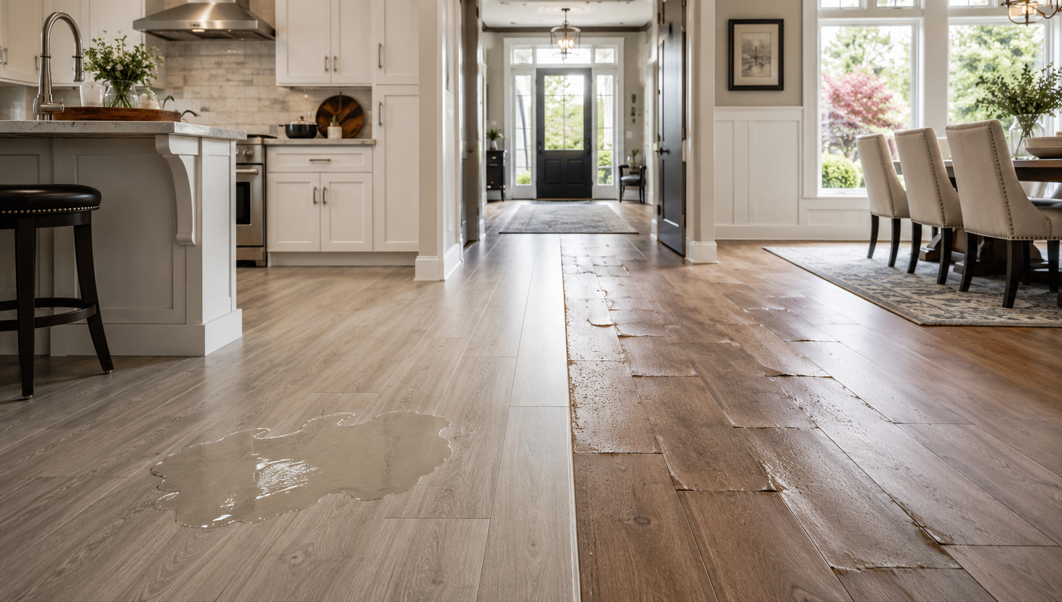
A wet floor is part of real life in Northville. Snow gets tracked through the door, boots leave slush near the entry, pets come in with damp paws, and kitchens and laundry rooms deal with everyday spills. Add Michigan’s seasonal changes, and moisture performance becomes an important part of choosing new flooring.
That is where two labels often appear: waterproof and water-resistant. They sound almost interchangeable, but homeowners should not assume they promise the same level of protection on every product.
In practical terms, water-resistant flooring is designed to resist surface moisture for a certain level or period of exposure, while waterproof flooring is marketed to provide a higher level of protection against water reaching or damaging the flooring itself. The important catch is that there is no useful one-size-fits-all promise hidden inside either word. Product construction, locking joints, edge treatments, installation details, warranty language, and the type of water event all matter. The North American Laminate Flooring Association notes that “waterproof” and “water-resistant” can both describe resistance to surface water exposure in laminate, with the actual degree of protection varying by product.
For homeowners comparing new floors, Urban Floors offers waterproof flooring alongside laminate, luxury vinyl, hardwood, carpet, and other categories, plus samples and guidance from flooring specialists.
So, which option makes sense for your Northville home? Start with the room, the likely source of moisture, and the exact warranty rather than choosing based on the label alone.
What Does Water-Resistant Flooring Actually Mean?
Water-resistant flooring is made to handle some contact with moisture without immediate damage. That might include a drink spill, damp shoes, small splashes near a sink, or water that is cleaned up within the product’s allowed exposure period.
The word “resistant” matters. It does not mean the flooring can be submerged, left under standing water indefinitely, or exposed to a plumbing leak without consequences.
Protection Depends on the Whole Plank
Water performance is not determined by the top surface alone. For laminate flooring, NALFA identifies several parts of the construction that can contribute to water performance, including the surface, locking system, treated bevels and edges, and core technology.
That explains why two laminate products can respond differently to the same spill. One may have enhanced edge protection and tightly engineered joints, while another may have a more basic construction intended for drier areas.
Exposure Time Can Matter
Some water-resistant products specify how long normal household spills can remain on the surface before cleanup is required. That timing varies by manufacturer and collection.
A homeowner might see phrases such as “water-resistant for 24 hours” or another defined period. Treat that as a product-specific performance statement, not permission to ignore spills. Prompt cleanup remains the better habit.
Water Resistance Is Often Enough in the Right Room
A quality water-resistant floor can work very well in living rooms, dining rooms, bedrooms, hallways, and some kitchens when the product is approved for those spaces.
The key question is not whether water could ever touch the floor. It is how often moisture appears, how much water is likely, and how quickly it can be cleaned up.
What Does Waterproof Flooring Mean?
Waterproof flooring is generally designed so the flooring material itself can withstand water exposure more effectively than a standard water-resistant product. This is common in many luxury vinyl and rigid-core products, and some manufacturers also market specific laminate or hybrid products as waterproof.
For example, current Shaw luxury vinyl products include collections marketed as 100% waterproof, while Mohawk’s WetProtect system combines water-tight joints, a waterproof finish, and a surface-and-subfloor waterproof warranty on qualifying products.
Those examples show why homeowners need to look beyond the word on the display tag.
Waterproof Flooring Does Not Make a Room Floodproof
This distinction is easy to miss.
A waterproof plank may not be damaged by water in the way a less moisture-tolerant material would, but water can still move around the flooring. It may reach baseboards, drywall, cabinets, vents, transitions, or the subfloor depending on the product and installation system.
A burst pipe or major appliance leak is also very different from a cup of water spilled during dinner.
Read the warranty to see what is actually covered. Some products include protection for the flooring only. Others may offer specific subfloor coverage when installed according to the manufacturer’s system.
Joints and Edges Matter
A waterproof core is only one part of the story.
If the product depends on a locking system, water performance may rely on tight joints that limit moisture from moving between planks. Edge treatments, perimeter sealing requirements, transition details, and installation technique can also affect the complete system.
This is one reason professional guidance can be useful in kitchens, laundry spaces, basements, and entry areas where moisture is more likely.
Waterproof vs Water-Resistant: The Difference That Matters Most
If you are standing in a flooring showroom comparing samples, the most useful way to think about the difference is this:
Water-resistant flooring is built to manage limited moisture exposure. Waterproof flooring is built for a higher level of water protection, but the exact protection still depends on the product and installation.
That answer is more useful than assuming “waterproof” means indestructible or that “water-resistant” means unsuitable for a busy home.
Look at the Warranty, Not Just the Marketing Line
Before choosing a product, check:
What types of spills are covered?
Is there a time limit for surface water exposure?
Are appliance leaks covered or excluded?
Does coverage apply only to the plank, or also to the subfloor?
Are bathrooms, laundry rooms, or basements approved?
Does the warranty require perimeter sealing or specific accessories?
Are steam cleaners or wet mops allowed?
What happens if water enters from beneath the floor?
NALFA specifically recommends following each manufacturer’s installation, maintenance, and warranty guidance because the level of water protection differs from product to product.
That fine print is not a minor technicality. It tells you how the floor is expected to perform in the situations that matter in your house.
Where Waterproof Flooring Makes the Most Sense in Northville Homes
Some spaces naturally face more moisture than others. In those areas, stepping up to a true waterproof product can provide useful peace of mind.
Homeowners can explore waterproof flooring options while comparing the exact construction, approved rooms, style, and warranty of each product.
Mudrooms and Busy Entries
Northville winters can be rough on an entry floor. Snow-packed boots, melted slush, road salt, and wet coats can turn a mudroom into a moisture zone several times a day.
Waterproof flooring is especially attractive here because small puddles may sit unnoticed while everyone is coming and going.
A practical entry setup still helps:
Use an absorbent mat near exterior doors.
Remove gritty debris that can scratch the finish.
Wipe up puddles once you see them.
Keep wet boots on a tray rather than directly on the floor.
Waterproof performance reduces one concern, but good daily habits still protect the floor’s appearance.
Kitchens
Kitchens deal with several possible sources of water: sinks, dishwashers, refrigerators, ice makers, pet bowls, cooking spills, and frequent cleaning.
A waterproof floor can be a strong fit for households that cook often or have children and pets. It can also work well in open-plan homes where the kitchen connects directly to a family room and homeowners want one continuous floor.
Water-resistant flooring may also be suitable if the manufacturer approves kitchen installation and the household is comfortable with the product’s cleanup requirements.
Laundry Rooms
Laundry rooms combine water connections, appliances, detergents, and heavy loads moving across a relatively small floor area.
A waterproof product is often worth considering here. Still, remember that a major washing-machine leak may affect more than the flooring, so waterproof planks do not replace leak detection, proper plumbing, or appliance maintenance.
Basements
Basements deserve extra attention because moisture can come from above or below.
A waterproof flooring material may handle topical spills well, but basement subfloor moisture is a separate issue. The slab or subfloor needs to meet the flooring manufacturer’s moisture requirements, and the correct underlayment or moisture-control system may be needed.
Do not use the word “waterproof” as a shortcut around subfloor preparation.
When Water-Resistant Flooring Can Be a Smart Choice
Not every room needs the highest moisture specification available.
Water-resistant products can make sense when occasional spills are possible but standing water is not part of the normal routine.
Living and Dining Areas
A living room may see the occasional drink spill, plant-water mishap, or damp pet paw, but it usually does not face the same constant exposure as a mudroom or laundry room.
A water-resistant product with the right wear performance and style may be more than suitable.
Kitchens With Controlled Moisture
Some households are careful about spills, have a separate mudroom, and rarely deal with standing water in the kitchen.
In that situation, a quality water-resistant floor approved for kitchen use can still be a practical choice. Compare the water exposure limit and warranty before deciding.
Do Kids and Pets Change the Choice?
They can.
Families do not use floors gently, and that is perfectly normal. Water bowls get bumped. Snow melts off jackets. Juice lands beside the table. Pets track moisture inside after a rainy walk.
If your household produces frequent spills or you know cleanup is not always immediate, waterproof flooring can remove some pressure from daily life.
Look Beyond Water Protection
Moisture is only one performance category. Also compare:
Scratch resistance
Dent resistance
Stain resistance
Wear-layer or surface durability
Texture and slip feel
Cleaning requirements
Warranty terms for pets
Ease of replacing a damaged plank
Some current waterproof collections also add scratch, stain, or dent resistance, but those features still need to be verified on the exact style.
Style and Appearance Still Matter
Moisture performance no longer means settling for a purely functional look. Waterproof and water-resistant flooring now comes in a wide range of wood, stone, and tile visuals, from warm oak tones and light naturals to deeper browns and neutral stone-inspired designs.
For a Northville kitchen, mudroom, or open-plan space, compare the floor with cabinetry, countertops, trim, furniture, and adjacent flooring. Look at several planks together if possible so you can judge grain variation, pattern repetition, texture, and sheen. A sample that looks great under showroom lighting can feel different in your home’s daylight or evening lighting.
Installation Can Affect Water Performance
A high-performing floor still needs to be installed according to its system requirements.
This matters especially when a waterproof claim depends on the completed floor assembly rather than the plank alone.
Subfloor Preparation Comes First
The subfloor needs to meet the manufacturer’s requirements for cleanliness, flatness, stability, and moisture.
Installing a waterproof product over an unresolved moisture problem does not solve the underlying condition.
Perimeters and Transitions Need Attention
Some waterproof systems have specific instructions for bathrooms, kitchens, doorways, cabinets, wall perimeters, or transitions.
Skipping required sealants or accessories may affect both performance and warranty coverage.
Appliance Areas Deserve Planning
In kitchens and laundry rooms, installers also need to consider appliance clearances, movement, floor height, and whether heavy fixed objects can sit on the flooring under the product’s installation rules.
These details are easier to address before installation than after the new floor is in place.
How to Care for Waterproof and Water-Resistant Floors
Both categories are designed with everyday living in mind, but “easy care” does not mean “anything goes.”
Clean Spills Promptly
Even with waterproof flooring, there is little benefit in leaving water sitting on the surface. Prompt cleanup protects surrounding materials and keeps residue from building up.
Remove Michigan Grit and Salt
Winter grit can act like sandpaper under shoes and chair legs. Sweep, vacuum with an approved hard-floor setting, or use the manufacturer’s recommended method regularly.
Road salt can also leave a cloudy residue. Use only cleaning products approved for your flooring rather than reaching for strong household chemicals.
Be Careful With Steam
Do not assume a waterproof label means steam cleaning is approved. Heat and pressurized moisture can affect some flooring systems.
Check the care instructions for the exact product before using a steam mop.
Protect High-Use Areas
Use appropriate floor protectors under furniture and keep entry mats where they can capture moisture and grit. If the flooring manufacturer has restrictions on rubber-backed mats or certain rug pads, follow those recommendations.
Questions to Ask Before You Buy
A few direct questions can make the waterproof-versus-water-resistant decision much clearer.
Ask your flooring specialist:
Is this product officially waterproof or water-resistant?
What does that term mean in this manufacturer’s warranty?
How long can surface water remain before cleanup?
Is it approved for my kitchen, bathroom, laundry room, or basement?
Does the warranty cover appliance leaks?
Does it cover damage to the subfloor?
Are special perimeter-sealing steps required?
What moisture testing is needed for the subfloor?
Can I use the same flooring through adjoining rooms?
What cleaning products and methods are approved?
Is steam cleaning allowed?
What other durability features does this product offer?
If the answers are clear and documented, it becomes much easier to compare products fairly.
Choose Protection Based on the Way You Live
Waterproof flooring and water-resistant flooring can both be excellent choices for a Northville home. The difference is not that one category is always good and the other is always inadequate.
It comes down to exposure and expectations.
If you are flooring a mudroom that sees snow-covered boots all winter, a laundry room with water connections, or a busy kitchen where spills are routine, waterproof flooring may offer the level of protection you want.
If you are updating a living room, bedroom, dining room, or another space where moisture is occasional and quickly cleaned, a quality water-resistant product may give you the performance, appearance, and value you need.
Most importantly, read the exact product details. Waterproof and water-resistant labels can mean different things across flooring categories and manufacturers, and the warranty defines the protection you are actually buying. NALFA’s water-performance guidance reinforces this product-by-product approach rather than treating the terms as universal guarantees.
Urban Floors carries waterproof options and offers in-store shopping, samples, room-visualization tools, and specialist guidance to help customers compare flooring for their spaces. If you are deciding how much moisture protection your Northville home needs, get in touch for personalized help finding a floor that fits the room, your routine, and your design plans.


