

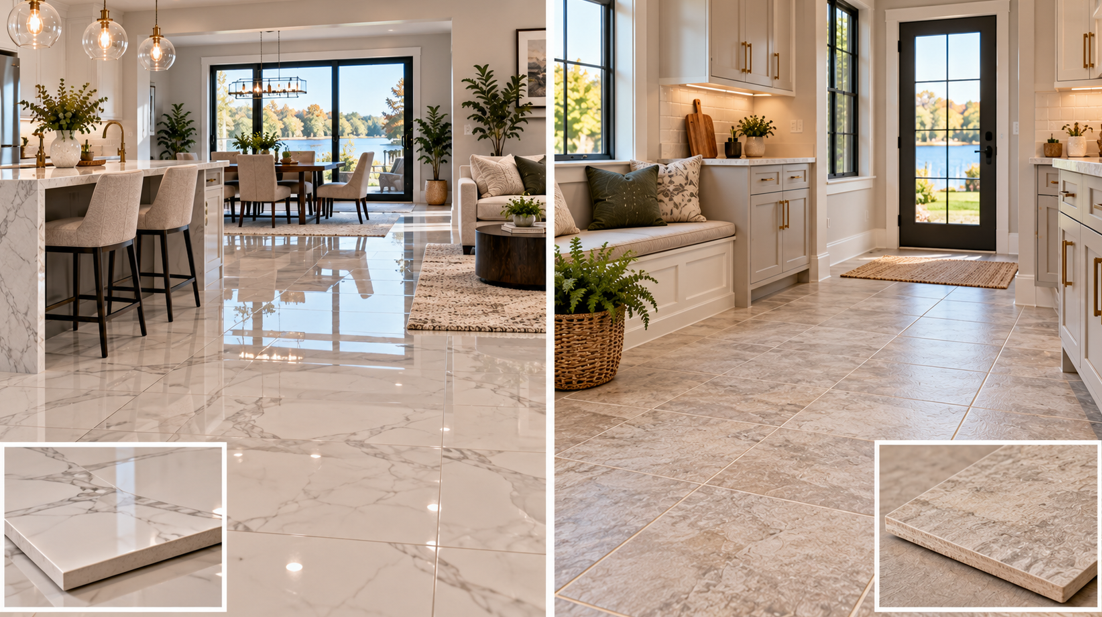
Life in Walled Lake moves with the seasons. Summer means lake days, wet swimsuits and sandy feet, while winter brings snow boots, road salt and slush at every door. Floors in these homes need to handle a lot, and tile remains one of the most durable choices available. At Urban Floors, our main showroom sits right here on E West Maple Rd, and one of the most common questions we hear is whether porcelain or ceramic tile is the better fit.
Both are beautiful, long-lasting options. This comparison explains how they differ and where each one works best on your floors.
What Is the Difference Between Porcelain and Ceramic Tile?
Porcelain and ceramic tile are both made from clay that is shaped and fired in a kiln. The difference comes down to the materials and the firing process.
Porcelain Tile
Porcelain uses a finer, denser clay mix and is fired at higher temperatures. The result is a very hard tile with low water absorption. Many porcelain tiles are through-body or color-body, meaning the color runs deep into the tile, so chips are less noticeable.
Ceramic Tile
Ceramic tile uses a coarser clay and is fired at lower temperatures. It is a little softer and more porous than porcelain, and it usually has a glazed surface that carries the color and pattern. Ceramic is lighter in weight and easier to cut, which can help keep installation affordable.
Comparing Porcelain and Ceramic Side by Side
Water Resistance
Porcelain absorbs very little water, which makes it the stronger choice for bathrooms, laundry rooms, mudrooms and lower levels. Glazed ceramic resists water well on the surface and performs nicely in most indoor rooms with normal moisture.
Durability
Porcelain's density makes it highly resistant to wear, scratches and heavy foot traffic. Ceramic is durable for everyday use in bedrooms, bathrooms and lighter-traffic areas, though it may chip more easily under heavy impact.
Style and Design
Both come in a huge range of looks. Porcelain is especially popular for realistic wood-look planks and large-format stone looks. Ceramic offers bright colors, patterned designs and classic shapes that bring personality to smaller spaces.
Comfort
Tile feels cool underfoot, which is welcome in a humid Michigan summer but less so in January. Area rugs, radiant heat or warm slippers help during the colder months.
Cost and Installation
Ceramic tile is generally the more budget-friendly option and is quicker to cut and set. Porcelain's hardness takes more specialized tools and skill, which can affect installation time. Both offer excellent lasting value.
Why Tile Suits Walled Lake Living
Lake living and Michigan weather create a unique set of demands. Tile handles them well:
Wet feet and swimsuits. Porcelain shrugs off water tracked in from summer lake days.
Road salt and slush. Tile cleans up easily after snowy commutes.
Spring thaw. Porcelain is a reliable choice for basements that see seasonal moisture.
Pets and kids. Hard, scratch-resistant surfaces hold up to claws and toys.
Questions to Ask Before You Choose
Before you settle on a tile, think about who uses the room and how. Is it the first stop after a muddy lake day or a snowy walk? Does the dog come in through that door? Will the floor sit on a basement slab? Your answers point clearly toward porcelain or ceramic, and our team can help you weigh them.
Best Rooms for Porcelain Tile
Entryways and mudrooms
Bathrooms and shower floors
Laundry rooms
Finished basements
Kitchens with heavy foot traffic
Three-season rooms and sunrooms
Best Rooms for Ceramic Tile
Guest bathrooms and powder rooms
Bedrooms and low-traffic spaces
Kitchens with moderate use
Accent areas where color and pattern take center stage
Design Ideas for Tile Floors
When you browse tile flooring, consider how style choices can shape the feel of each room.
Wood-Look Porcelain
Wood-look porcelain planks give you the warmth of hardwood with the toughness of tile, a great fit for lake homes and busy family spaces.
Large-Format Stone Looks
Large tiles create fewer grout lines and a clean, modern look in kitchens and open living areas.
Patterned Ceramic
Patterned and encaustic-style ceramic tiles add character to powder rooms, laundry rooms and entries.
Textured Finishes
Matte and textured tiles offer better grip and hide water spots, a smart pick for entries and bathrooms.
Caring for Porcelain and Ceramic Tile
Both tile types are easy to maintain with a simple routine:
Sweep or vacuum to remove sand, grit and salt
Mop with a pH-neutral tile cleaner
Seal grout lines and reseal as recommended
Use mats at exterior doors during winter and summer lake season
Wipe up spills to keep grout looking fresh
Grout is the part that needs the most attention, so choosing a darker grout color in high-traffic areas helps hide everyday dirt.
See Tile in Person at Urban Floors
Urban Floors carries thousands of square feet of in-stock flooring, including American-made, tariff-free options, and the newest lines from major manufacturers at competitive prices. Visit our Walled Lake showroom at 1017 E West Maple Rd, open Monday to Friday 10am to 6pm and Saturday 10am to 5pm, or book an appointment at our Sylvan Lake or Plymouth showrooms. You can also request samples at home, try our online visualizer and ask about financing.
Choose the Right Tile for Your Home
Porcelain is the go-to for wet areas, heavy traffic and lower levels, while ceramic offers great style and value for bathrooms, bedrooms and lighter-use rooms. Many homes use both, matching each tile to the room it serves. Either way, you get a beautiful, durable floor built for lake living and Michigan winters.
Ready to compare porcelain and ceramic up close? Stop by the showroom or call (248) 940-3365. Contact our team and we will help you find the right tile for every room in your home.


