

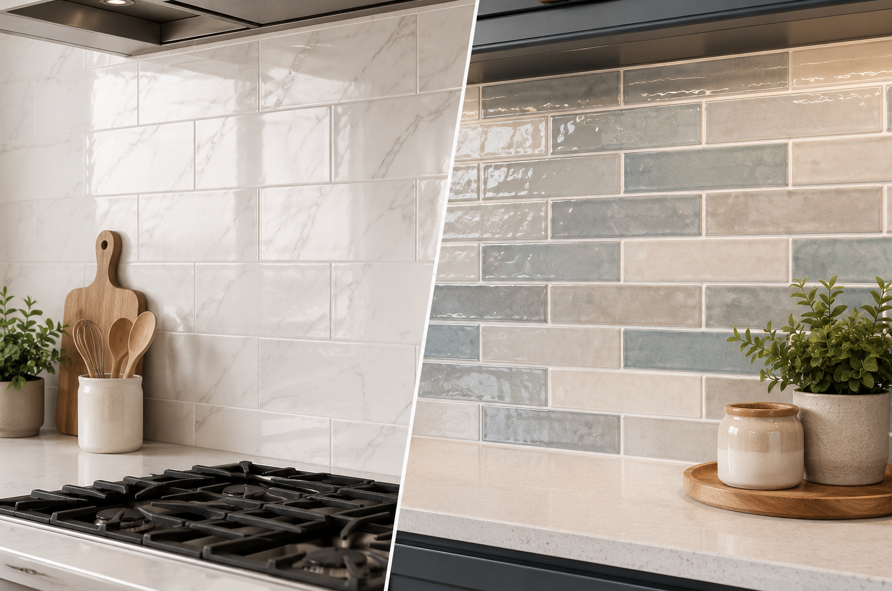
Why Your Kitchen Backsplash Matters More Than You Might Think
A kitchen backsplash does much more than protect walls from cooking splatters and moisture. It helps define the overall character of the space, complements cabinetry and countertops, and contributes to the long-term functionality of the kitchen.
For many Northville homeowners planning kitchen updates during the summer renovation season, selecting the right backsplash material becomes an important design decision. Two of the most popular options are porcelain tile and ceramic tile. At first glance, they often look very similar, but their performance, durability, appearance, and cost can vary significantly.
At Urban Floors, homeowners frequently ask whether porcelain or ceramic tile is the better investment for kitchen backsplashes. The answer depends on several factors, including budget, design goals, maintenance expectations, and how the kitchen is used daily.
This guide compares porcelain and ceramic tile across the areas that matter most so you can confidently choose the best backsplash solution for your Northville kitchen.
Understanding the Difference Between Porcelain and Ceramic Tile
Before comparing performance and design benefits, it's helpful to understand what separates these two popular materials.
What Is Ceramic Tile?
Ceramic tile is made from natural clay and other minerals that are shaped, glazed, and fired at high temperatures.
It has been used in homes for decades because it offers:
Design versatility
Affordability
Easy maintenance
Attractive finishes
Reliable durability
Ceramic remains one of the most commonly selected materials for residential kitchen backsplashes.
What Is Porcelain Tile?
Porcelain tile is technically a type of ceramic tile, but it is manufactured differently.
The clay used in porcelain is denser and more refined. Porcelain tiles are fired at higher temperatures, resulting in a material that is:
Less porous
More durable
More moisture resistant
Stronger overall
These characteristics often make porcelain a premium option for many home renovation projects.
Why the Difference Matters for Backsplashes
While backsplashes don't experience the same wear as flooring, they still encounter:
Steam
Grease
Cooking splashes
Cleaning products
Temperature fluctuations
Understanding how porcelain and ceramic respond to these conditions helps homeowners make better long-term decisions.
Porcelain Tile Advantages for Kitchen Backsplashes
Porcelain tile offers several characteristics that make it attractive for modern kitchens.
Superior Moisture Resistance
One of porcelain's biggest strengths is its low water absorption rate.
Because porcelain is extremely dense, it resists moisture exceptionally well. This makes it particularly useful behind sinks, cooktops, and food preparation areas where water exposure is common.
Although backsplashes generally aren't exposed to standing water, moisture resistance still contributes to long-term durability.
Exceptional Durability
Porcelain is one of the strongest tile products available.
Its dense composition helps it resist:
Chips
Cracks
Scratches
Everyday wear
For busy family kitchens where cooking happens frequently, this added durability can provide valuable peace of mind.
High-End Design Options
Modern porcelain manufacturing has advanced significantly.
Today's porcelain tiles can replicate:
Natural stone
Marble
Travertine
Concrete
Wood
Contemporary designer finishes
Many Northville homeowners choose porcelain because it delivers a sophisticated appearance while remaining highly practical.
Color Consistency
Many porcelain products feature color that extends throughout the tile body.
This means that if minor chips occur, they may be less noticeable than on some glazed ceramic products.
Ideal for Contemporary Kitchens
Porcelain is especially popular in:
Modern kitchens
Transitional designs
Luxury renovations
Open-concept living spaces
Its clean appearance and premium feel complement many current design trends.
Ceramic Tile Advantages for Kitchen Backsplashes
Ceramic tile continues to be a favourite among homeowners for good reason.
Budget-Friendly Design Flexibility
One of ceramic tile's greatest strengths is value.
Homeowners often have access to a wide variety of styles, colours, and finishes at a more approachable investment compared to porcelain.
This allows greater flexibility when balancing multiple renovation expenses.
Easier Cutting and Installation
Ceramic is generally easier to cut and shape than porcelain.
This can simplify installation around:
Electrical outlets
Switches
Windows
Corners
Decorative accents
For intricate backsplash designs, ceramic often provides greater installation flexibility.
Huge Range of Decorative Styles
Ceramic tile offers nearly endless design possibilities.
Popular options include:
Subway tile
Handcrafted looks
Glossy finishes
Matte finishes
Textured surfaces
Patterned designs
Decorative mosaics
Many homeowners appreciate the creative freedom ceramic provides.
Easy Cleaning and Maintenance
Kitchen backsplashes benefit from materials that clean easily.
Ceramic tile typically requires nothing more than:
Mild cleaning products
Warm water
Occasional grout maintenance
This straightforward maintenance routine appeals to busy households.
Excellent Choice for Most Backsplash Applications
Because backsplashes experience relatively light physical wear compared to flooring, ceramic often provides more than enough durability for the application.
For many homeowners, ceramic delivers an excellent balance of performance and value.
Comparing Appearance: Which Material Offers Better Design Potential?
Design is often the deciding factor when selecting a backsplash.
Fortunately, both porcelain and ceramic offer impressive visual possibilities.
Porcelain Design Characteristics
Porcelain tends to excel at creating premium looks.
Popular options include:
Large-format panels
Marble-look designs
Stone-inspired textures
Contemporary minimalist styles
High-end luxury finishes
Many homeowners choose porcelain when aiming for a refined, upscale kitchen aesthetic.
Ceramic Design Characteristics
Ceramic shines when creativity and decorative variety are priorities.
Popular styles include:
Traditional subway tiles
Handmade-inspired designs
Colourful accents
Decorative patterns
Vintage looks
Farmhouse-inspired styles
Ceramic often provides more flexibility for homeowners looking to introduce personality and character.
Which Looks Better?
Neither material is objectively more attractive.
The better choice depends on the overall design vision.
Porcelain often supports sleek, modern kitchens, while ceramic frequently excels in spaces where colour, texture, and decorative elements play a larger role.
Durability Comparison: Which Tile Handles Kitchen Life Better?
Durability matters even in backsplash applications.
Porcelain Durability
Porcelain's density provides exceptional resistance to:
Chipping
Cracking
Heat exposure
Moisture
Everyday impact
For homeowners seeking maximum longevity, porcelain is difficult to beat.
Ceramic Durability
Ceramic remains highly durable for backsplash applications.
Although it is somewhat less dense than porcelain, it still performs extremely well in kitchens when properly installed and maintained.
Practical Reality
For most backsplash projects, both materials provide more than enough durability.
The difference becomes more noticeable in heavy-duty applications rather than standard residential backsplashes.
Cleaning and Maintenance Requirements
Kitchen backsplashes inevitably collect:
Grease
Food splatters
Steam residue
Everyday cooking messes
Fortunately, both tile types are easy to maintain.
Cleaning Porcelain Tile
Porcelain's dense surface helps resist staining and moisture penetration.
Most spills can be removed with:
Warm water
Mild cleaners
Soft cloths
Routine cleaning typically keeps porcelain looking beautiful for years.
Cleaning Ceramic Tile
Ceramic offers similar ease of maintenance.
Its glazed surface helps prevent staining and simplifies daily cleaning.
Grout Matters Too
Regardless of tile selection, grout maintenance remains important.
Homeowners can minimise upkeep by:
Choosing quality grout products
Using appropriate sealers when recommended
Cleaning spills promptly
In many cases, grout maintenance influences long-term appearance more than the tile itself.
Cost Comparison: Which Option Delivers Better Value?
Budget often plays a major role in renovation decisions.
Porcelain Tile Costs
Porcelain generally costs more due to:
Manufacturing processes
Material density
Premium product positioning
Installation costs may also be slightly higher because porcelain can be more challenging to cut.
Ceramic Tile Costs
Ceramic often represents the more economical option.
Homeowners can achieve beautiful backsplash designs while maintaining flexibility within renovation budgets.
Looking Beyond Initial Cost
The best value isn't always the lowest price.
When comparing options, homeowners should consider:
Expected lifespan
Maintenance requirements
Design goals
Overall kitchen renovation plans
A slightly higher initial investment may provide greater long-term satisfaction.
Which Tile Works Best for Different Kitchen Styles?
Modern and Contemporary Kitchens
Porcelain often complements:
Minimalist designs
Large-format installations
Sleek cabinetry
Contemporary finishes
Traditional Kitchens
Ceramic works beautifully with:
Classic subway tile layouts
Traditional cabinetry
Decorative accents
Timeless colour palettes
Farmhouse Kitchens
Ceramic frequently supports:
Handmade-inspired looks
Textured finishes
Warm, inviting aesthetics
Luxury Kitchen Renovations
Porcelain often appeals to homeowners seeking:
Premium finishes
Marble-inspired visuals
High-end design statements
The ideal choice depends on the broader design vision rather than the material alone.
How Northville Homeowners Can Make the Right Decision
Choosing between porcelain and ceramic tile doesn't need to be complicated.
Consider these questions:
Is Maximum Durability a Priority?
If yes, porcelain may be the stronger choice.
Are You Working Within a Specific Budget?
If value and affordability are important, ceramic often delivers excellent results.
Do You Want a Premium Stone-Look Design?
Porcelain frequently excels in replicating natural stone and luxury materials.
Are Decorative Patterns and Colours Important?
Ceramic often provides greater flexibility for creative design expressions.
How Long Do You Plan to Stay in the Home?
Long-term homeowners may place greater emphasis on durability and resale considerations.
The best backsplash choice is ultimately the one that aligns with your home's design, your family's lifestyle, and your renovation goals.
Finding the Right Backsplash for Your Northville Kitchen
Both porcelain and ceramic tile can create beautiful, durable, and functional kitchen backsplashes.
Porcelain stands out for its strength, moisture resistance, and premium appearance. Ceramic offers outstanding design versatility, affordability, and everyday practicality. Neither option is universally better. Instead, each serves different homeowner priorities.
For many Northville families, the ideal solution becomes clear after viewing samples in person and comparing colours, textures, and finishes alongside cabinetry and countertops.
If you're exploring backsplash options or planning a kitchen renovation, browsing quality tile flooring products can provide valuable inspiration for your project. The experienced team at Urban Floors can help you compare materials, evaluate design options, and identify the best fit for your home. When you're ready to discuss your renovation goals, reach out to us for personalised guidance.


