

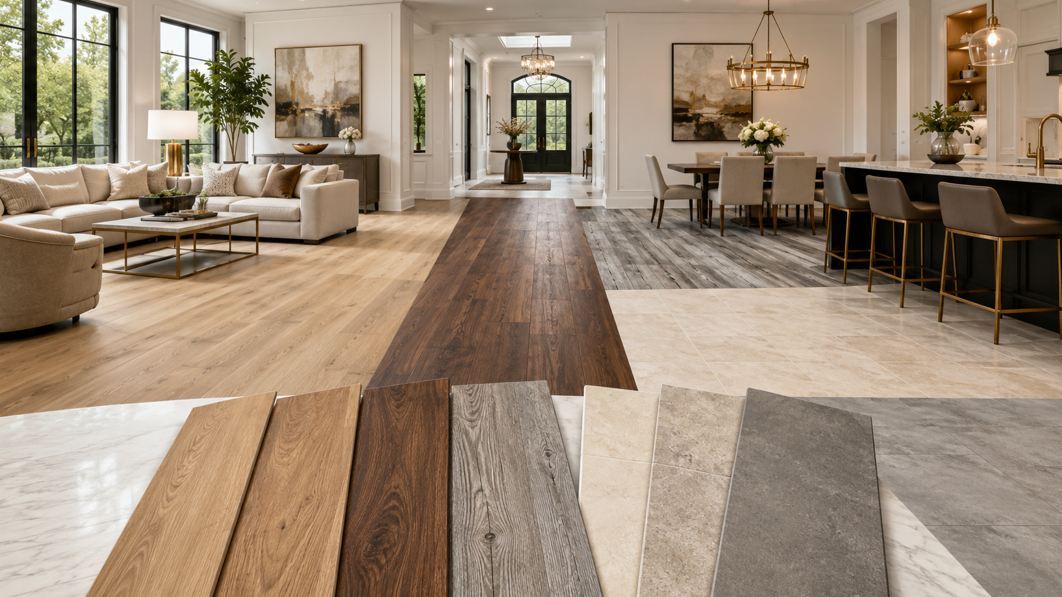
Laminate flooring has moved far beyond the flat, repetitive designs many homeowners may remember from years ago. Today’s collections can recreate the grain, color variation, texture, and plank proportions of natural hardwood with impressive detail. Some options also reproduce the appearance of stone, ceramic, and patterned tile while offering a warmer, more comfortable surface underfoot.
That combination makes laminate worth considering for Bloomfield Hills homes. It can bring the appearance of oak into a family room, create a stone-inspired foundation in an entryway, or introduce a distinctive pattern without requiring the same care as some natural materials.
The latest designs are less about making every plank look perfectly uniform. Instead, they embrace natural variation, deeper textures, subtle bevels, and warmer colors. Wide-plank oak, herringbone layouts, rich walnut tones, limestone-inspired visuals, and understated checkerboard patterns can all support a polished interior.
At Urban Floors, homeowners can compare samples in person and see how different patterns respond to their cabinets, trim, lighting, and existing finishes. The right design needs to complement the entire room, not simply look attractive on a small display board.
Why Modern Laminate Looks More Realistic
Modern laminate is built from several layers that work together to create its appearance and performance.
The decorative layer uses a high-resolution image of wood, stone, or tile. Above it, a transparent wear layer helps protect the printed design. Beneath the image, a dense core gives the plank structure and stability.
Shaw describes laminate construction as including a decorative photographic layer that recreates hardwood, followed by a transparent wear layer. Texture can then be added to strengthen the floor’s natural appearance.
The biggest visual improvements come from the way those layers are designed.
Embossed-in-Register Texture
Embossed-in-register texture, often called EIR, aligns the surface texture with the printed image below it.
When the image shows a wood knot, the surface may include a corresponding indentation. When the grain changes direction, the texture follows it. This coordination makes the plank look and feel closer to natural hardwood.
Pergo currently uses embossed-in-register texture in selected laminate products, including a hickory design with rich brown tones and visible grain detail.
More Pattern Variation
Earlier laminate products sometimes repeated the same printed image frequently, which made the installation easier to identify as manufactured flooring.
Newer collections may use a larger number of plank visuals, varied color tones, and more natural grain placement. The result looks less repetitive across a large family room or open-concept floor.
Defined Plank Edges
Pressed, painted, or lacquered bevels can create a subtle line around each plank. This helps separate the boards visually and makes them resemble individually installed hardwood pieces.
The effect can be especially convincing with wider planks and matte finishes.
Improved Color Depth
Modern printing can reproduce multiple colors within a single plank. An oak pattern may include honey, tan, beige, brown, and soft gray rather than one flat shade.
This variation helps the floor coordinate with more elements in the room, including cabinetry, furniture, countertops, and architectural woodwork.
Warm Oak Patterns Are Taking the Lead
Warm oak remains one of the most versatile laminate looks for Bloomfield Hills interiors.
Rather than the cool, heavily gray floors that dominated many renovations in previous years, newer oak patterns often feature beige, wheat, honey, almond, and light caramel tones. Shaw’s current Wildwood laminate collection, for example, includes oak-inspired options described through warm natural colors and rustic textures.
Warm oak can make a room feel inviting without appearing overly traditional. It works particularly well in transitional homes, where classic architectural details are combined with cleaner furniture and contemporary lighting.
Where Warm Oak Works Well
Consider warm oak laminate for:
Open-concept kitchens and family rooms
Casual dining spaces
Bedrooms
Home offices
Finished basements
Hallways connecting several rooms
Interiors with cream, beige, or warm white walls
A light or medium oak can also help balance darker features such as a navy island, black window frames, walnut furniture, or charcoal fireplace stone.
How to Keep It Current
Choose an oak pattern with restrained variation rather than dramatic orange or yellow tones. A natural matte finish generally looks more convincing than a high-gloss surface.
Planks with a subtle wire-brushed or sawn texture can create depth without making the room feel rustic.
The most adaptable colors sit between very pale white oak and deep brown. These middle tones provide warmth while leaving room for future changes to paint, furniture, and décor.
Wide-Plank Wood Looks Create a More Open Interior
Wide-plank laminate continues to appeal to homeowners who want a clean, spacious appearance.
Wider boards create fewer visible seams across the floor. In an open family room or long kitchen, that can make the surface feel calmer and less visually busy.
Many current laminate planks are around seven inches wide, while some premium-looking designs are wider. The ideal width depends on the dimensions and architecture of the room.
Best Rooms for Wide Planks
Wide-plank patterns work particularly well in:
Great rooms
Primary bedrooms
Open kitchens
Long hallways
Finished lower levels
Large home offices
A wide plank can also help unify connected rooms when the same flooring continues through several spaces.
Matching Width to the Room
Larger rooms can usually support more dramatic widths and stronger color variation. In a smaller bedroom or narrow corridor, a moderately wide plank may feel more balanced.
Plank direction also matters. Running the boards along the room’s longest dimension can emphasize length. Continuing the same direction through connected rooms often creates a smoother visual flow.
There are exceptions, particularly around structural conditions, subfloor requirements, and focal features. Installation direction needs to account for the manufacturer’s instructions as well as the design.
Hickory Patterns Add Character and Movement
Hickory-inspired laminate is a strong option for homeowners who want more visible variation than a typical oak pattern.
Hickory visuals often combine light and dark grain, pronounced knots, mineral streaks, and changing undertones. Colors may range from wheat and golden brown to coffee, red-brown, and deep chocolate.
Pergo currently offers hickory-inspired laminate in both warm golden shades and deeper brown colors. Selected products use embossed texture or embossed-in-register surfaces to increase realism.
Where Hickory Makes an Impact
Hickory can be effective in:
Family rooms
Casual kitchens
Rustic-modern interiors
Homes with exposed beams
Rooms with stone fireplaces
Interiors using black or bronze hardware
Because the pattern already contains plenty of movement, the surrounding finishes may benefit from being more restrained.
Simple cabinet doors, solid-colored upholstery, and quiet countertops can keep the room from appearing overly busy.
View Several Planks Together
A single hickory sample rarely tells the full story. Ask to see multiple planks or a larger installed display so you can judge the full range of colors and markings.
This is especially important in an open-plan room, where strong variation will be visible across a broad area.
Walnut and Deep Brown Patterns Bring Back Richness
Light floors remain popular, but deeper wood tones are returning as homeowners look for interiors with more contrast and character.
Walnut-inspired laminate can introduce chocolate, espresso, chestnut, or red-brown shades. These patterns often feel more formal than pale oak and can complement the traditional millwork found in many Bloomfield Hills homes.
How to Use Dark Laminate Successfully
Dark floors work best when the room has enough natural or artificial light to support them.
They can create an attractive foundation for:
Cream or warm white walls
Light upholstered furniture
Brass or aged bronze hardware
Pale quartz countertops
Soft neutral area rugs
Painted cabinetry
In a kitchen, dark wood-look laminate can provide dramatic contrast against light perimeter cabinets. In an office or library, it can reinforce a more tailored atmosphere.
Consider Daily Maintenance
Darker floors may show dust, pet hair, and light-colored grit more readily than medium-tone patterns. Homeowners need to consider whether the visual effect is worth the additional attention.
A design with moderate grain and color movement can be more forgiving than a nearly solid espresso surface.
Natural Maple and Pale Wood Looks Keep Rooms Bright
Pale laminate does not need to appear bleached or stark.
Current light-wood designs often include cream, beige, soft tan, and faint honey undertones. These colors reflect light while maintaining enough warmth to keep the room comfortable.
A pale maple, birch, or natural oak visual may suit Bloomfield Hills homes with:
Limited daylight
Lower ceilings
Smaller rooms
Dark cabinetry
Colorful artwork
Contemporary furniture
Scandinavian-inspired interiors
Light flooring can also make a finished basement feel more open, especially when combined with layered lighting and warm wall colors.
Avoid an Overly Washed-Out Room
When the floor, walls, cabinets, and furniture are all very pale, the room can lose definition.
Add contrast through:
Dark hardware
Wood furniture
Textured rugs
Colored cabinetry
Stone accents
Black-framed lighting
Upholstery with visible pattern
The floor can remain light while the room still feels grounded.
Herringbone and Chevron Patterns Make Laminate Decorative
Wood-look laminate does not always need to follow a standard straight-plank layout.
Herringbone and chevron patterns introduce movement and architectural detail. They can make laminate feel less like a neutral background and more like an intentional design feature.
Herringbone
Herringbone uses rectangular pieces arranged at right angles to create a broken zigzag.
It has a classic appearance that works well in traditional, transitional, and European-inspired interiors.
Consider herringbone for:
Foyers
Dining rooms
Formal living rooms
Home offices
Kitchen breakfast areas
Chevron
Chevron uses angled plank ends that meet to form continuous points.
The pattern feels sharper and more directional than herringbone. It often suits modern or highly tailored interiors.
Use Pattern Selectively
A strong pattern can become overwhelming when installed throughout every room.
Homeowners may choose it for one defined space and use straight planks elsewhere. Another option is to use a patterned area as an inset surrounded by a simpler border.
Not every laminate collection supports herringbone or chevron installation. The planks, locking system, and manufacturer instructions need to be designed for the selected arrangement. A standard plank should not be cut or reconfigured into a pattern unless the manufacturer approves that use.
Mixed-Width Patterns Create a Custom Wood Appearance
Mixed-width flooring recreates the appearance of traditional installations where boards were not all the same size.
The effect can range from rustic to refined, depending on the color and grain.
A pattern might combine narrow, medium, and wide boards. Some laminate products create this look within the printed plank itself, while others use separate plank widths.
Where Mixed Widths Work Best
This style can complement:
Farmhouse-inspired kitchens
Homes with reclaimed-wood details
Relaxed family rooms
Lake-influenced interiors
Transitional spaces needing more texture
The pattern is already visually active, so it works best with a controlled color palette.
For a more polished Bloomfield Hills interior, consider mixed widths in a consistent warm oak color rather than a highly distressed design with extreme color contrast.
Tile-Look Laminate Offers Another Direction
Wood visuals dominate laminate collections, but tile and stone patterns can offer a distinctive alternative.
Tile-look laminate uses printed designs to recreate materials such as:
Limestone
Slate
Travertine
Concrete
Marble
Ceramic tile
These patterns can bring the visual structure of tile into a room while feeling warmer underfoot.
When exploring laminate flooring, homeowners need to confirm whether a specific collection is designed as a wood plank, stone visual, or tile format. Product availability and water-performance claims vary by manufacturer and collection.
Limestone and Travertine Looks
Soft limestone visuals often use cream, beige, greige, and pale taupe. They can work beautifully with warm painted cabinets and natural wood accents.
Travertine-inspired patterns introduce gentle movement and small changes in tone without the strong veining of marble.
These styles suit:
Entryways
Kitchens
Breakfast rooms
Sunrooms
Laundry areas
Slate Patterns
Slate-look laminate can provide darker color, texture, and contrast.
Charcoal, black, deep gray, and earthy brown slate visuals pair well with light cabinets, industrial-style fixtures, or stone fireplaces.
Because dark tile patterns can make a room feel smaller, they often work best in spaces with generous light.
Concrete-Inspired Designs
Concrete visuals support modern and minimalist interiors.
They may feature subtle mottling in pale gray, warm greige, or charcoal. Unlike actual concrete, laminate typically feels less cold underfoot and does not require a poured installation.
Concrete patterns can complement flat-panel cabinets, matte black fixtures, and simple furniture.
Checkerboard and Geometric Tile Looks Add Personality
Checkerboard floors have returned in a more restrained form.
Instead of relying only on sharp black-and-white contrast, current interpretations may combine:
Cream and taupe
White and warm gray
Beige and brown
Charcoal and soft gray
Stone shades with subtle variation
A quieter color combination can make the pattern feel elegant rather than theatrical.
Where Checkerboard Works
Checkerboard patterns can be effective in:
Foyers
Powder rooms
Laundry rooms
Pantries
Breakfast areas
Mudrooms
The pattern works best when the surrounding room includes simpler surfaces. Detailed wallpaper, strong cabinet grain, and a bold checkerboard floor may compete for attention when used together.
Confirm the Pattern Is Product-Approved
Some checkerboard appearances come from alternating approved tile-look products. Others are printed as part of a manufactured floor design.
The installation needs to follow the product instructions. Mixing unrelated laminate colors or collections may create differences in thickness, locking systems, edge treatments, and warranty coverage.
Choosing a Pattern for Each Interior Style
The best laminate pattern supports the home’s architecture and the homeowner’s preferred level of contrast.
Traditional Interiors
Consider:
Warm medium oak
Walnut
Refined hickory
Herringbone
Limestone-inspired tile
Traditional rooms often benefit from defined edges, rich tones, and controlled variation.
Transitional Interiors
Consider:
Natural oak
Warm greige wood
Wide planks
Light hickory
Subtle stone patterns
Transitional spaces can balance classic cabinetry with streamlined flooring.
Contemporary Interiors
Consider:
Pale oak
Concrete-inspired laminate
Long wide planks
Low-contrast grain
Soft geometric patterns
A matte finish and simple plank layout generally strengthen the contemporary effect.
Rustic-Modern Interiors
Consider:
Character oak
Mixed widths
Hickory
Weathered wood visuals
Deep natural brown
Choose realistic texture without excessive distressing to keep the room current.
Performance Matters as Much as Pattern
An attractive design still needs to suit the room’s conditions.
NALFA maintains an ANSI-accredited performance standard for laminate flooring and provides certification resources covering performance, durability, and optional water-resistance testing. The association approved proposed updates to its LF-01 standard in May 2026 as part of an ongoing review process.
When comparing products, review:
Water-resistance or waterproof claims
Approved rooms
Wear and stain protection
Impact performance
Installation system
Attached underlayment
Residential warranty
Cleaning instructions
Certification information
Waterproof Claims Need Context
Selected laminate collections are marketed as waterproof and may be approved for kitchens or bathrooms. Pergo, for example, currently lists products with waterproof technologies, wet-mopping approval, and attached padding.
Those features vary by product. A water-resistant surface does not automatically correct plumbing leaks, subfloor moisture, or installation problems.
Follow the manufacturer’s requirements for expansion spacing, perimeter sealing, transitions, and wet-area installation.
Consider Walled Entrances and Winter Grit
Although this article focuses on Bloomfield Hills interiors, the wider Metro Detroit climate still matters.
Snow, salt, sand, and moisture can enter through exterior doors. Entry mats and prompt cleaning can help protect the wear layer and maintain the floor’s appearance.
No wood-look or tile-look pattern eliminates the need for regular care.
How to Compare Laminate Samples at Home
A sample can look very different after it leaves the showroom.
Place each option in the intended room and observe it throughout the day.
Check Natural and Artificial Light
Morning light may make a floor appear cooler, while warm evening bulbs may strengthen yellow or red undertones.
Look at the sample under the lighting you use most often.
Compare It With Fixed Finishes
Place the sample next to:
Cabinetry
Countertops
Fireplace stone
Wall paint
Interior doors
Existing wood trim
Adjacent flooring
A floor does not need to match these elements exactly. It needs to share compatible undertones.
Look at More Than One Plank
Color variation, grain repetition, and edge detail are easier to evaluate when several pieces are viewed together.
For patterned or character-heavy styles, ask to see a larger display or installation photograph.
Think Beyond Current Décor
Furniture and wall colors can change more easily than flooring.
Choose a pattern that works with the home’s architecture and major fixed elements rather than selecting it only to match one rug or sofa.
Find a Laminate Pattern That Feels Right at Home
The latest laminate designs can recreate natural materials with more depth, texture, and variation than earlier generations. Warm oak and hickory bring inviting wood character, wide planks simplify open spaces, and herringbone or mixed-width designs add architectural interest.
Tile-look laminate provides another option for homeowners drawn to limestone, slate, concrete, or checkerboard patterns. The best choice depends on the room, lighting, surrounding finishes, household activity, and performance requirements.
Urban Floors can help Bloomfield Hills homeowners compare full-size samples, review product specifications, and coordinate new flooring with cabinetry, countertops, and existing interior details.
Ready to explore wood-look and tile-look laminate for your home? Get in touch with the Urban Floors team for personalized guidance.
Frequently Asked Questions
What Laminate Pattern Looks Most Like Real Hardwood?
Products with embossed-in-register texture, varied plank images, matte finishes, and defined bevels often provide the most realistic hardwood appearance. Viewing several planks together helps reveal how naturally the grain and color repeat.
Are Gray Laminate Floors Still in Style?
Gray has not disappeared, but warmer greige, beige, oak, honey, and natural brown tones are becoming more prominent. Homeowners who prefer gray may want to consider a warmer version that coordinates easily with wood furniture and cream-colored finishes.
Can Laminate Look Like Tile or Stone?
Yes. Selected laminate products recreate limestone, slate, concrete, ceramic, and other stone or tile surfaces through printed designs and surface texture. Availability varies, so confirm the format and specifications of the individual collection.
Is Wide-Plank Laminate Suitable for Small Rooms?
It can be. Wide planks may reduce the number of seams and create a calmer appearance. Extremely wide boards or highly varied patterns may overwhelm a compact space, so view samples in the room before choosing.
Can Laminate Be Installed in a Kitchen?
Many current laminate products are approved for kitchens, including selected waterproof collections. Confirm the manufacturer’s installation, sealing, cleaning, and warranty requirements for the exact product.


