

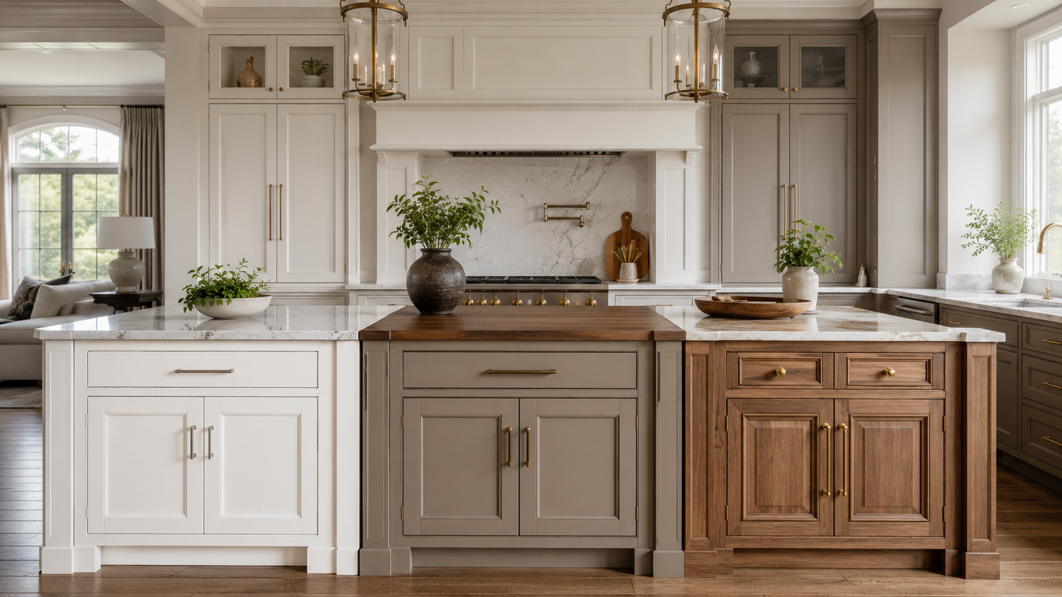
Kitchen cabinets do far more than hold plates and pantry staples. They shape the layout, establish the room’s style, and influence how comfortably the kitchen works every day. For Bloomfield Hills homeowners planning a renovation, choosing between KraftMaid, other semi-custom cabinetry, and stock cabinets is one of the project’s most important decisions.
Each option has a place. Stock cabinets offer a streamlined path for projects with firm budgets or shorter timelines. Semi-custom cabinets provide greater flexibility in sizing, finishes, storage, and design. KraftMaid is a well-known semi-custom brand with an extensive selection of door styles, finishes, cabinet configurations, and organizational features.
The right choice depends on more than appearance. Your kitchen’s dimensions, storage needs, architectural character, project timeline, and long-term plans all matter.
At Urban Floors, homeowners can coordinate cabinets with flooring, countertops, and the wider kitchen design instead of treating each element as a separate decision. That complete-room approach can help create a space that feels intentional and functions beautifully.
The Quick Answer
For many Bloomfield Hills kitchen renovations, semi-custom cabinetry provides the most balanced combination of design freedom, functional storage, and manageable cost.
KraftMaid may be the best fit when you want an established semi-custom cabinet line with a broad range of styles, finishes, configurations, and storage accessories. The brand’s core cabinetry collection includes comprehensive customization choices and a limited lifetime warranty, while its more streamlined lines offer fewer selections at a more accessible price point.
Stock cabinets may be a practical choice when:
The kitchen has a straightforward layout.
Standard cabinet dimensions fit the room well.
The project has a tightly controlled budget.
A shorter purchasing timeline is important.
Extensive finish or storage customization isn’t necessary.
Semi-custom cabinetry may be worth the additional investment when:
The room has unusual dimensions or architectural features.
Storage efficiency is a leading priority.
You want a more coordinated, furniture-like design.
Standard cabinet sizes would leave awkward gaps.
You want more control over doors, finishes, moldings, or organizational features.
No category is automatically superior. A thoughtfully planned stock kitchen can serve a household better than poorly selected premium cabinets. The best choice is the one that supports the room’s layout, the homeowner’s priorities, and the complete project budget.
Understanding the Three Cabinet Categories
Cabinets are generally grouped into stock, semi-custom, and fully custom categories. These terms describe the level of choice and modification available, not simply whether a cabinet is well made.
MasterBrand, KraftMaid’s parent company, describes stock cabinets as entry-level products with limited options, semi-custom cabinets as offering more styles and features, and custom cabinets as providing the broadest selection of materials, finishes, construction platforms, and modifications.
Stock Cabinets
Stock cabinets are manufactured in predetermined dimensions, configurations, door styles, and finishes. They are designed to work in common kitchen layouts and are often available more quickly than made-to-order cabinetry.
Some stock products are available directly from inventory. Others are ordered from a limited catalog but still use fixed dimensions and a streamlined selection process.
Stock cabinetry can be appealing because it offers:
Predictable pricing
Familiar cabinet sizes
A simple selection process
Popular door styles and colors
Potentially shorter lead times
Practical options for straightforward layouts
The main limitation is flexibility. If the kitchen requires an unusual cabinet width, reduced depth, furniture-style detail, or a specialized storage configuration, stock choices may not provide the right fit.
Semi-Custom Cabinets
Semi-custom cabinets begin with a manufacturer’s established product catalog but allow more personalization.
Depending on the brand and collection, homeowners may be able to select:
Additional cabinet widths and heights
Modified depths
More door styles
Wider finish palettes
Different wood species
Decorative moldings
Glass-front doors
Pantry configurations
Pull-out storage
Appliance panels
Interior organizers
Furniture-style details
Semi-custom cabinets are commonly built to order. MasterBrand notes that this category generally provides more styles, features, and finish options than stock cabinetry while remaining below the cost of fully custom work.
Fully Custom Cabinets
Fully custom cabinets are designed and built around the project’s exact requirements. They can be useful when a kitchen includes highly unusual dimensions, complex architectural details, or a design that cannot be created through a semi-custom catalog.
Custom cabinetry generally involves the longest design and production process and the highest initial investment. It may be appropriate for distinctive homes, but many homeowners can achieve a highly personalized result with a well-planned semi-custom line.
What Is KraftMaid Cabinetry?
KraftMaid is a semi-custom cabinet manufacturer offering products for kitchens, bathrooms, and other spaces. Rather than building every cabinet from an entirely blank design, the company provides an extensive catalog of cabinet sizes, door styles, colors, storage features, and decorative options.
The main KraftMaid collection includes a broad choice of finishes and customization options. KraftMaid Vantage, available through independent dealers, includes the brand’s main style choices and construction features while adding all-plywood construction and matching interiors for glass-door cabinets as standard features.
KraftMaid also offers streamlined collections for homeowners seeking a more focused selection. KraftMaid Elements promotes popular door styles, finishes, and storage features at an approachable price point, while still offering semi-custom design choices.
KraftMaid Door and Finish Options
One of KraftMaid’s strongest advantages is its range of design choices.
The company currently lists more than 100 door-style results and offers options across numerous wood types, including maple, hickory, oak, and rustic alder. Available designs include square and arched profiles, full and partial overlays, and different center-panel treatments.
That breadth can help homeowners create:
Clean contemporary kitchens
Traditional paneled designs
Transitional spaces
Warm natural-wood kitchens
Painted Shaker-style rooms
Two-tone cabinet schemes
Statement islands
Furniture-inspired built-ins
The number of choices can also make professional planning valuable. A finish that looks beautiful on a small sample may appear different across a full wall of cabinets or under the kitchen’s lighting.
KraftMaid Storage Features
KraftMaid offers organizational options designed to make cabinets more functional. Current examples shown by the manufacturer include:
Roll-out pantry trays
Corner storage systems
Pull-out wastebasket cabinets
Knife and utensil organizers
Pegged dish drawers
Mixer-lift cabinets
Charging drawers
Under-sink storage
Appliance-specific cabinets
These features can reduce countertop clutter and make deep cabinets easier to use. They can be particularly valuable in kitchens where the existing footprint will remain largely unchanged but the homeowners want better storage.
KraftMaid Decorative Details
Semi-custom cabinetry can create a more finished appearance through details such as:
Crown molding
Light-rail molding
Decorative end panels
Island legs
Corbels
Open shelving
Glass inserts
Finished cabinet interiors
Contrasting hoods
Decorative toe kicks
These additions aren’t necessary in every kitchen. Selective use often creates a more polished result than applying decorative elements everywhere.
When Stock Cabinets Make Sense
Stock cabinetry is sometimes dismissed too quickly. For the right project, it can provide a stylish and functional result without directing an excessive portion of the remodeling budget toward cabinets.
Straightforward Kitchen Layouts
Stock cabinets work best when the room aligns closely with standard dimensions.
A simple galley, L-shaped, or single-wall kitchen may be easier to plan with fixed cabinet sizes than a room with angled walls, multiple ceiling heights, or unusual appliance locations.
Small gaps can sometimes be addressed with fillers or finished panels. However, too many fillers can reduce usable storage and make the design feel less tailored.
Budget-Focused Renovations
Cabinetry is usually one of the largest expenses in a kitchen renovation. Selecting stock cabinets may leave more room in the budget for:
Durable flooring
Updated countertops
New appliances
Improved lighting
Electrical upgrades
Plumbing work
A larger island
Professional installation
The goal isn’t simply to select the lowest cabinet price. It is to allocate the project budget where it creates the greatest practical and visual benefit.
Shorter Project Timelines
Stock cabinets may be available sooner because manufacturers produce a limited range of standard products. This can make them helpful when cabinets need to be replaced quickly following property damage, a move, or a time-sensitive renovation.
Availability still depends on the retailer and selected finish. A stock line shouldn’t be assumed to be immediately available until every cabinet in the order has been confirmed.
Secondary Spaces
Stock cabinets can be an excellent choice for spaces that do not require extensive personalization, including:
Laundry rooms
Mudrooms
Basement kitchenettes
Home offices
Garage storage
Rental properties
Butler’s pantries
Using stock cabinets in secondary rooms may also allow homeowners to invest more heavily in the primary kitchen.
Where Stock Cabinets Can Fall Short
The limitations of stock cabinets become more noticeable in complex or highly visible kitchens.
Limited Sizes
Stock cabinets usually come in common widths and heights. That can create unused gaps beside appliances, at wall ends, or near architectural features.
Fillers may improve the appearance but do not provide storage.
Smaller Design Selection
Stock lines often focus on broadly popular doors and finishes. That may be enough for a classic white or gray kitchen, but homeowners seeking a particular wood species, painted color, inset appearance, or decorative finish may find the range restrictive.
Fewer Storage Options
Basic drawers and shelves can function well, but stock lines may not offer the same variety of pull-outs, appliance lifts, interior dividers, and specialized pantry cabinets available through semi-custom collections.
Aftermarket organizers can help, although they need to fit the cabinet dimensions correctly.
Less Flexibility Around Appliances
Large refrigerators, range hoods, wall ovens, and built-in microwaves often require precise cabinet planning. A limited stock catalog may make it harder to achieve balanced spacing or a built-in appearance.
Why Semi-Custom Cabinets Suit Many Bloomfield Hills Kitchens
Bloomfield Hills homes range from mid-century properties to traditional estates and newer luxury construction. Their kitchens may include large footprints, distinctive trim, high ceilings, irregular walls, or layouts that have evolved through previous renovations.
Semi-custom cabinetry can respond to these conditions without requiring every component to be designed from scratch.
Better Use of Available Space
A wider range of cabinet dimensions can reduce fillers and help make more of the room usable.
This is especially valuable near:
Refrigerator walls
Range surrounds
Pantry areas
Corners
Islands
Windows
Door openings
Sloped or varying ceilings
Even a small dimensional adjustment can turn an awkward gap into useful tray storage, spice organization, or a narrow pull-out cabinet.
More Personalized Design
Semi-custom cabinetry allows homeowners to move beyond a standard showroom appearance.
They may choose one finish for perimeter cabinets and another for the island, add glass doors to a beverage station, or use a contrasting wood hood as a focal point.
The result can feel customized while remaining within an established manufacturing system.
Expanded Storage
Thoughtful internal storage often provides more daily value than decorative features.
Helpful additions may include:
Deep drawers for pots
Vertical tray dividers
Pull-out waste and recycling
Corner swing-outs
Pantry roll-outs
Spice storage
Utensil dividers
Appliance garages
Charging stations
The best features respond to the homeowner’s actual routine. A mixer lift has little value for someone who rarely bakes, while a wide drawer beneath the cooktop may transform meal preparation for an enthusiastic home cook.
Coordinating the Full Kitchen
Cabinet decisions influence flooring, countertops, backsplash materials, hardware, and paint.
Homeowners exploring custom cabinetry can compare these elements as part of one coordinated design. For example, warm white cabinets may pair well with natural oak-look flooring, while a dark island may need lighter countertops to keep the room balanced.
KraftMaid vs. Other Semi-Custom Cabinets
KraftMaid belongs within the semi-custom category, so the comparison is not strictly between separate types of products. The real question is whether KraftMaid’s catalog, construction choices, warranty, dealer support, and design options fit the project better than another semi-custom manufacturer.
Reasons to Consider KraftMaid
KraftMaid may stand out because of its:
Extensive door selection
Broad finish palette
Multiple wood choices
Storage accessories
Decorative enhancements
Established retail and dealer network
Core limited lifetime warranty
Streamlined and upgraded product lines
Replacement and touch-up support
The company also maintains order tracking and provides touch-up products for current cabinet finishes, which may be useful during ownership.
Reasons to Compare Other Brands
Another semi-custom line may provide:
A preferred door style
A particular finish
Different box construction
More favorable lead times
A better fit for the budget
A specific frameless construction option
Different sizing modifications
Dealer-exclusive features
A more suitable warranty
Homeowners benefit from comparing actual proposals rather than assuming all semi-custom cabinets include the same construction or services.
Review the cabinet box, shelves, drawer construction, hinges, glides, finish process, warranty, delivery terms, and installation scope.
Comparing Cabinet Construction
The category label alone does not reveal how a cabinet is built. Stock and semi-custom products can use different materials and construction methods.
Cabinet Boxes
Cabinet boxes may use furniture board, plywood, or a combination of materials.
Plywood is often selected for its strength and resistance to fastener movement. Furniture board can also provide consistent dimensions and a smooth surface when properly manufactured.
Rather than treating one material as universally acceptable and another as unsuitable, compare:
Panel thickness
Joinery
Back construction
Shelf capacity
Hanging rails
Interior finish
Moisture exposure
Warranty coverage
KraftMaid Vantage includes all-plywood construction as a standard feature, while other KraftMaid lines may offer different standard or upgraded construction choices.
Drawers and Glides
Dovetail drawer construction is often associated with higher cabinet tiers, but the glide system also matters.
Look for drawers that operate smoothly and remain stable when fully extended. Soft-close glides can reduce slamming and create a more refined daily experience.
Hinges
Concealed hinges support a clean exterior appearance. Adjustable hinges also allow installers to align doors after installation and make minor corrections as the cabinets settle.
Shelves
Check whether shelves are full-depth, adjustable, and appropriately supported. A wide cabinet holding heavy cookware needs stronger shelving than a small cabinet used for glassware.
How Cabinet Choices Affect the Budget
Cabinet cost is influenced by more than the stock or semi-custom label.
Major pricing factors include:
Number of cabinets
Cabinet dimensions
Door style
Wood species
Painted or stained finish
Full or partial overlay
Center-panel material
Plywood upgrades
Interior organizers
Decorative panels
Moldings
Glass doors
Appliance panels
Delivery
Installation
KraftMaid notes that door style can have a significant effect on cost. Within otherwise comparable designs, full-overlay doors generally cost more than partial-overlay doors, and solid-wood center panels can cost more than veneer or engineered panels.
A successful budget prioritizes features rather than adding every available upgrade.
Consider investing first in:
A functional layout
Reliable construction
Quality installation
Frequently used storage
Durable finishes
Correct appliance fit
Decorative accessories can then be selected according to their visual impact and available budget.
Lead Times and Project Planning
Stock cabinetry may offer the fastest route, but timelines vary according to availability. A missing corner cabinet or finished panel can delay an otherwise complete order.
Semi-custom cabinets are built to order and generally require a longer production period. MasterBrand describes typical semi-custom delivery as approximately four to eight weeks, although actual timing varies by brand, collection, dealer, finish, and current production conditions.
A realistic kitchen schedule also needs to account for:
Design revisions
Final measurements
Product ordering
Demolition
Electrical work
Plumbing changes
Wall repairs
Cabinet delivery
Installation
Countertop templating
Countertop fabrication
Backsplash installation
Final adjustments
Avoid removing the existing kitchen based on an estimated cabinet date alone. Confirm the delivery and inspect the order for visible damage or missing pieces before coordinating the next stages.
Choosing the Best Option for Your Kitchen
Choose Stock Cabinets When:
Standard sizes fit the layout.
The project has a controlled budget.
You prefer a simple selection process.
Extensive customization isn’t important.
The renovation timeline is relatively short.
The cabinets are intended for a secondary space or rental.
Choose Semi-Custom Cabinets When:
The layout needs modified dimensions.
Storage efficiency matters.
You want more door and finish choices.
The kitchen includes architectural challenges.
A tailored appearance is important.
You want specialized organizers.
The project budget supports greater personalization.
Choose KraftMaid When:
You like its available doors and finishes.
Its storage accessories fit your household.
You want an established semi-custom line.
A limited lifetime warranty is important.
You want access to several product tiers.
Your designer can create the desired layout within its catalog.
Local dealer support meets your expectations.
Compare More Than One Proposal When:
Two brands offer a similar design.
Construction specifications differ.
Lead times are important.
One proposal includes more installation work.
Storage upgrades affect the price significantly.
Warranty terms are not equivalent.
The final totals are close.
Make the Cabinet Decision Part of the Complete Design
KraftMaid, other semi-custom cabinets, and stock cabinets can all create attractive Bloomfield Hills kitchens. The right choice depends on how much flexibility the room needs and where the homeowner wants to invest.
Stock cabinets offer simplicity, value, and potentially faster availability. Semi-custom cabinets provide more control over layout, style, and storage. KraftMaid combines semi-custom flexibility with a wide catalog of door styles, finishes, organizational features, and decorative details.
Before ordering, compare complete designs rather than individual cabinet prices. Confirm the construction, dimensions, accessories, warranty, delivery expectations, and installation scope. Then view the cabinet samples beside the flooring, countertops, hardware, and paint colors planned for the room.
Urban Floors can help bring those decisions together so the finished kitchen feels coordinated, functional, and personal. To discuss cabinetry and material options for your Bloomfield Hills renovation, reach out to us.
Frequently Asked Questions
Is KraftMaid Considered Stock or Semi-Custom Cabinetry?
KraftMaid is generally considered a semi-custom cabinetry brand. Its core collection offers numerous cabinet configurations, doors, finishes, storage options, and modifications. More streamlined KraftMaid lines provide a smaller selection for homeowners seeking an easier, more budget-conscious process.
Are Semi-Custom Cabinets Worth the Additional Cost?
Semi-custom cabinets can be worth the investment when greater sizing flexibility improves the layout or when specialized storage will make the kitchen work better. They may offer less value in a straightforward room where standard cabinet sizes already fit well.
How Long Do Semi-Custom Cabinets Take to Arrive?
MasterBrand gives a general estimate of four to eight weeks for semi-custom cabinet delivery, but actual lead times vary. The selected brand, finish, modifications, production schedule, and dealer can all affect timing.
Are Stock Cabinets Lower Quality?
Stock refers mainly to the range of sizes, finishes, and modifications available. It does not automatically describe quality. Homeowners still need to compare cabinet materials, joinery, drawers, hinges, shelves, finish quality, and warranty coverage.
Can Stock and Semi-Custom Cabinets Be Used in the Same Home?
Yes. Homeowners may choose semi-custom cabinets for the main kitchen and stock cabinets for a laundry room, mudroom, basement bar, or home office. This approach can help direct more of the budget toward the rooms where customization provides the greatest benefit.


