

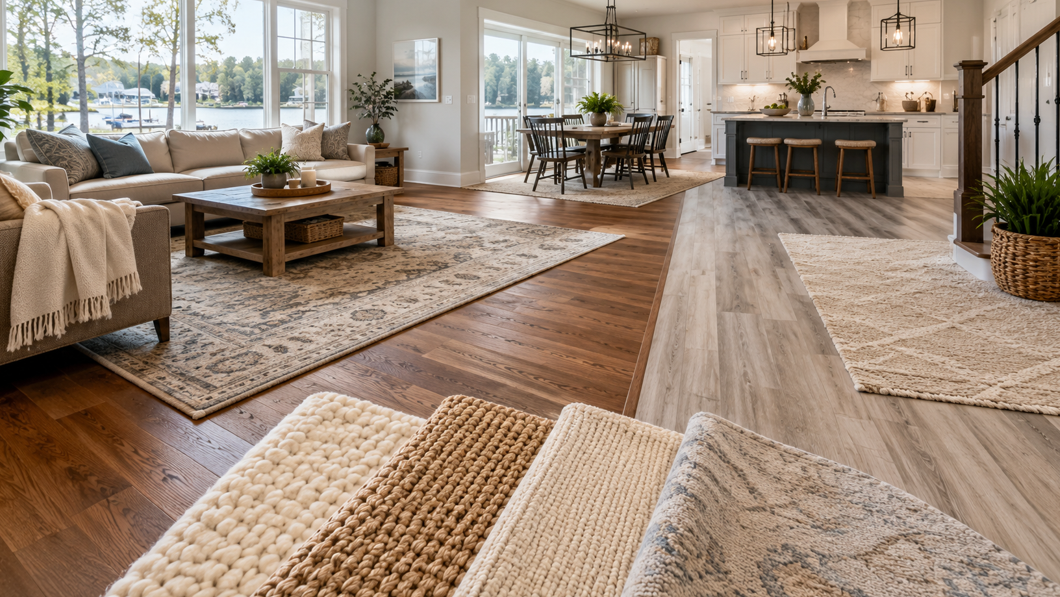
Area rugs can make a room feel warmer, quieter, and more complete, but the material beneath the pattern matters just as much as the color or size. A rug that looks beautiful in a Walled Lake living room may still be a poor match if it traps moisture, sheds heavily, slides across the floor, or uses a backing that could affect the finish underneath.
Hardwood and luxury vinyl flooring have different care requirements, but both benefit from thoughtfully selected rugs and rug pads. The right combination can soften busy family spaces, protect high-traffic areas, and add texture without covering the character of the flooring.
Michigan weather also deserves attention. Snow, road salt, damp shoes, and wet pet paws can introduce moisture and grit into entryways throughout the year. Rug materials that perform well in a quiet bedroom may not be the best choice beside an exterior door or in a hardworking mudroom.
At Urban Floors, homeowners can compare flooring, rug options, and room samples together rather than making each decision separately. That helps ensure the rug complements the floor visually while also supporting the way the room is used.
The Quick Answer
The best rug material depends on the room and the flooring below it.
For most living rooms and bedrooms, wool is an excellent choice because it feels comfortable, offers natural resilience, and brings warmth to hardwood or luxury vinyl floors. Wool-blend rugs can provide a similar look at a more accessible price point.
For dining rooms, family rooms, and homes with children or pets, solution-dyed synthetic fibers such as polypropylene or selected polyester constructions may be easier to clean. Natural fibers such as jute and sisal can add beautiful texture, although they need more careful placement because moisture, rough backing, and shedding may create concerns.
Cotton rugs work well in smaller areas where washable convenience matters, but they usually need a reliable rug pad to prevent shifting.
A useful starting point is:
Choose wool for comfort, longevity, and polished living spaces.
Choose wool blends for a balance of performance and value.
Choose polypropylene for practical cleaning and active rooms.
Choose polyester for softness, color, and stain resistance.
Choose cotton for lightweight, washable accent rugs.
Choose jute or sisal for natural texture in dry, lower-risk areas.
Choose indoor-outdoor materials for mudrooms and moisture-prone transition spaces.
Whatever material you select, use a rug pad that is approved for the specific hardwood or vinyl floor. The backing that touches the floor can be just as important as the rug itself.
Why Rug Material Matters on Hard Surface Flooring
A rug changes more than the appearance of a room. It affects how the floor is used, cleaned, and experienced every day.
Surface Protection
Area rugs can help reduce direct wear in places where people walk repeatedly, such as:
Beside a bed
In front of a sofa
Under a dining table
Through a hallway
Near an entry door
Beneath a home office chair
They may also help catch small amounts of dirt before it spreads across the surrounding floor.
However, rugs are not a substitute for regular cleaning. Grit can collect underneath and act like fine sandpaper when the rug shifts. Lifting and cleaning beneath the rug is part of protecting both hardwood and luxury vinyl.
Comfort
Hard flooring creates a clean, open appearance, but some rooms benefit from a softer surface.
A rug can:
Add warmth beneath bare feet
Make seating areas feel more inviting
Cushion play areas
Improve comfort beside a bed
Reduce the firm feel of rigid-core vinyl
Create a softer place for pets to rest
The level of comfort depends on the fiber, pile height, construction, and rug pad.
Sound Control
Hardwood and luxury vinyl can reflect sound, especially in rooms with high ceilings, large windows, or minimal upholstered furniture.
Rugs help absorb:
Footstep noise
Conversation
Television sound
Echo within open spaces
The sound of children or pets moving through the room
A dense rug and quality pad usually provide more sound control than a thin flatweave used alone.
Visual Definition
Area rugs can define separate zones without adding walls.
In an open-concept home, a rug may distinguish:
The living area
The dining area
A reading corner
A conversation space
A home office
A children’s play zone
The rug material contributes to that effect. Plush wool creates a different atmosphere from woven jute or a low-pile synthetic rug.
What Hardwood Floors Need From an Area Rug
Hardwood has a natural surface that responds to light, moisture, temperature, dirt, and daily use.
A well-chosen rug can support the floor, but homeowners need to consider what happens beneath it.
Breathability
Hardwood benefits from a rug and pad combination that does not unnecessarily trap moisture against the surface.
This is especially important near exterior doors, sinks, and rooms where wet shoes or spills are common. Any damp rug needs to be removed and dried promptly rather than left in place.
Natural fibers can be breathable, but some absorb moisture readily. Synthetic materials may resist water better, yet their backing can still trap moisture if the rug is placed over a wet surface.
Color Changes From Light Exposure
Hardwood may change color over time as it is exposed to sunlight and indoor lighting. A large area rug can slow that change in the covered section.
When the rug is eventually moved, the protected area may look different from the surrounding floor.
To help the floor age more evenly:
Rotate rugs periodically when the room layout allows.
Use window treatments during intense sunlight.
Avoid leaving the same small rug in one position for many years without checking beneath it.
Follow the flooring manufacturer’s care guidance.
The amount of color change varies by wood species, stain, finish, and light exposure.
Scratch Prevention
The rug itself should not have a rough underside that can rub against the finish.
A suitable pad helps create a stable layer between the rug and the wood. It also reduces movement, which may limit friction and make the rug more comfortable.
Avoid assuming that every non-slip backing is appropriate. Some rubber-like or plasticized materials may interact with certain finishes, particularly when heat, moisture, or prolonged contact is involved.
What Luxury Vinyl Floors Need From an Area Rug
Luxury vinyl is popular in Walled Lake homes because it combines wood-inspired visuals with straightforward care and practical water resistance. Still, rug selection matters.
Backing Compatibility
Some rug backings contain materials that may discolor or react with a vinyl surface over time. The concern is not always the rug fiber visible from above. It is often the backing or pad placed directly on the flooring.
Before using a rug, check:
The flooring manufacturer’s care instructions
The rug manufacturer’s backing information
Whether the pad is labeled for use on luxury vinyl
Whether any warranty limitations apply
Natural rubber is often preferred over lower-quality plasticized backings, but compatibility still needs to be confirmed for the exact flooring product.
Heat and Sunlight
Dark rugs placed in strong direct sunlight may absorb heat. Vinyl flooring can respond to temperature, so rooms with large south-facing windows need thoughtful product selection and regular observation.
The same principle applies to mats near heat sources. Avoid placing rugs where they may experience concentrated heat unless both the flooring and rug manufacturers approve the location.
Moisture Trapping
Luxury vinyl may resist surface moisture, but a wet rug can still create odor, staining, or hidden moisture around seams and edges.
In entryways and mudrooms:
Shake out or vacuum rugs regularly.
Remove wet mats promptly.
Allow the floor and rug to dry fully.
Avoid leaving snow-soaked rugs in place.
Clean road salt before it spreads.
Water-resistant flooring still benefits from careful moisture management.
Wool Rugs: A Comfortable and Refined Choice
Wool remains one of the most respected rug materials because it combines comfort, resilience, and visual depth.
Why Wool Works Well
Wool fibers naturally spring back after being compressed, helping a quality rug maintain its appearance in living rooms and other regularly used spaces.
Additional benefits may include:
A soft, comfortable feel
Good sound absorption
Rich color and texture
Natural resilience
Strong performance in living areas
A polished appearance beside hardwood
Wool can complement both traditional hardwood and modern luxury vinyl because it introduces softness without looking overly casual.
Best Rooms for Wool Rugs
Wool is particularly suitable for:
Living rooms
Formal sitting rooms
Bedrooms
Home offices
Dining areas with controlled use
Reading rooms
A lower-pile wool rug may be more practical beneath dining furniture than a thick, plush construction.
Points to Consider
Wool rugs can require a larger investment than many synthetic options. They may also shed, especially when new.
Moisture needs to be handled carefully. Wool absorbs liquid, so it may not be the first choice for a mudroom, laundry entrance, or space where wet boots are common.
Cleaning also needs to match the rug manufacturer’s instructions. Strong products or excessive moisture may affect the fiber, dye, or backing.
Best Match
Wool is a strong choice for homeowners who want long-term comfort and a high-quality finish in dry, well-maintained rooms.
Wool-Blend Rugs: Balanced Performance and Value
Wool-blend rugs combine wool with fibers such as nylon, polyester, or other synthetics.
The goal is often to retain some of wool’s warmth and resilience while improving affordability, durability, or stain performance.
Why Consider a Blend?
A quality wool blend may offer:
A softer feel than many fully synthetic rugs
Improved resilience
A more accessible price point than pure wool
Reduced shedding in some constructions
A broad choice of patterns
Practical performance for active rooms
The exact benefits depend on the percentage and type of fibers used.
A rug containing a small amount of wool may behave very differently from one in which wool is the primary fiber. Read the label instead of relying only on the phrase “wool blend.”
Best Rooms for Wool Blends
Consider wool blends in:
Family rooms
Dining rooms
Bedrooms
Home offices
Guest rooms
Transitional living spaces
They can work especially well where homeowners want a refined appearance but expect more everyday traffic than a formal room receives.
Polypropylene Rugs: Practical for Active Spaces
Polypropylene is widely used in area rugs because it is lightweight, colorfast, and relatively resistant to many common stains.
It is often selected for households that want practical cleaning and a broad range of designs.
Advantages of Polypropylene
Depending on the construction, polypropylene rugs may offer:
Strong stain resistance
A wide selection of colors and patterns
Resistance to fading
A more accessible price point
Low moisture absorption
Easy maintenance
Indoor-outdoor options
These qualities can make polypropylene useful in busy Walled Lake households.
Best Rooms for Polypropylene
Polypropylene may work well in:
Family rooms
Playrooms
Finished basements
Dining areas
Mudrooms
Entryways
Homes with pets
Covered outdoor transition areas
Low-pile constructions are often easier to vacuum and may allow furniture to move more comfortably.
Potential Drawbacks
Polypropylene may flatten in heavily used areas, particularly in lower-density rugs. It can also feel less luxurious than wool.
The backing still needs to be checked before placement on hardwood or luxury vinyl. A practical fiber does not automatically mean the complete rug is floor-safe.
Best Match
Polypropylene is a sensible choice for households prioritizing stain resistance, value, and straightforward care.
Polyester Rugs: Softness and Strong Color
Polyester rugs are known for softness and the ability to display rich, clear colors.
They may be especially appealing in bedrooms, family rooms, and spaces where comfort and visual impact matter.
Advantages of Polyester
Polyester can provide:
A soft feel
Good color clarity
Resistance to many water-based stains
A broad variety of patterns
Value across several price levels
Options made with recycled content
The fiber can work well in rugs with contemporary patterns, subtle tonal designs, or bold accents.
Best Rooms for Polyester
Consider polyester for:
Bedrooms
Guest rooms
Family rooms
Home offices
Low- to moderate-traffic sitting areas
A dense, low-pile polyester rug may perform better in an active room than a loosely constructed high-pile option.
Potential Drawbacks
Polyester may crush or mat under repeated pressure, particularly beneath heavy furniture or in a highly used pathway.
Oil-based marks may also require more careful cleaning than some water-based spills.
As with every rug, the backing and pad need to be suitable for the floor beneath it.
Nylon Rugs: Durable for High-Traffic Areas
Nylon is frequently used where durability and resilience are leading priorities.
It tends to recover well from foot traffic and furniture pressure, making it a useful option for spaces that receive regular use.
Advantages of Nylon
Nylon rugs may offer:
Strong resilience
Good performance in high-traffic spaces
Broad design choices
A comfortable surface
Reliable color options
Easier maintenance in selected constructions
Some nylon rugs include additional stain treatments. Homeowners need to follow the specific cleaning guidance for the product.
Best Rooms for Nylon
Nylon may suit:
Hallways
Family rooms
Dining rooms
Home offices
Playrooms
Main living areas
It can be an effective middle ground for homeowners who want a more substantial feel than many value-focused synthetics but need greater resilience than certain soft fibers provide.
Cotton Rugs: Lightweight and Convenient
Cotton rugs are often used as smaller accent pieces, flatweaves, runners, or washable rugs.
They are lighter than wool and easier to move, making them useful in rooms where frequent cleaning is expected.
Advantages of Cotton
Cotton rugs may provide:
A soft, casual texture
Lightweight handling
Washable options
Reversible designs
A broad range of patterns
An accessible way to update a room
They can introduce color without making the space feel heavy.
Best Rooms for Cotton
Cotton works well in:
Kitchens
Bedrooms
Children’s rooms
Bathrooms when permitted by the flooring manufacturer
Laundry areas
Small entry spaces
Washable designs can be especially convenient in homes with children or pets.
Potential Drawbacks
Cotton rugs can slide, wrinkle, or bunch more readily than heavier rugs. A compatible non-slip pad is usually helpful.
They also absorb moisture, so wet cotton rugs should not remain on hardwood or luxury vinyl.
Frequent washing may change the rug’s size, texture, or shape. Follow the care label and dry the rug completely before placing it back on the floor.
Jute Rugs: Natural Texture With Placement Limits
Jute has a soft, organic appearance that works beautifully with hardwood and wood-look vinyl.
Its woven texture can complement relaxed, transitional, coastal, and modern-rustic interiors.
When browsing area rugs, homeowners may be drawn to jute because it adds depth without introducing a strong color or pattern.
Advantages of Jute
Jute can offer:
Warm natural color
Rich woven texture
A relaxed appearance
Compatibility with many design styles
A visually soft transition over hard flooring
It pairs particularly well with oak, hickory, and warm wood-look luxury vinyl.
Best Rooms for Jute
Jute may suit:
Living rooms
Bedrooms
Home offices
Formal areas with moderate traffic
Dining rooms where spills are less likely
Layered rug arrangements
Potential Drawbacks
Jute absorbs moisture and may stain when exposed to water. It can also shed fibers or dust beneath the rug.
The underside may feel rough, so a protective pad is important on hardwood and luxury vinyl.
Jute is generally less suitable for:
Mudrooms
Wet entryways
Bathrooms
Laundry areas
Homes where frequent pet accidents are expected
Best Match
Jute works best as a decorative, textural choice in dry rooms where the rug can be maintained carefully.
Sisal Rugs: Firm, Structured, and Hard-Wearing
Sisal is another plant-based material, but it tends to feel firmer and coarser than jute.
Its clean woven appearance suits tailored, neutral interiors.
Advantages of Sisal
Sisal may provide:
Strong texture
A structured look
Natural color variation
Firm underfoot performance
Compatibility with modern and traditional rooms
It can define a seating area without introducing a plush surface.
Best Rooms for Sisal
Consider sisal for:
Home offices
Formal living rooms
Dry hallways
Dining rooms
Low-moisture entry spaces
Potential Drawbacks
Sisal can feel rough beneath bare feet. It is also sensitive to moisture and may develop marks when exposed to spills or damp cleaning.
A bound edge and appropriate pad may improve stability and protect the floor underneath.
Because sisal is firm, it may not be the most comfortable choice for children’s play areas or bedrooms.
Indoor-Outdoor Rugs for Entryways and Mudrooms
Indoor-outdoor rugs are often made from polypropylene or similar materials designed to handle moisture and regular cleaning.
They can be useful near exterior doors, where Michigan weather introduces snow, salt, mud, and water.
Why They Work
Indoor-outdoor rugs may offer:
Low moisture absorption
Easy cleaning
Fast drying
Stain resistance
Low-pile construction
Practical durability
These features can make them more suitable for transition areas than wool, jute, or sisal.
Important Placement Guidance
Even a moisture-resistant rug should not remain wet on the floor.
Lift it regularly to:
Check for trapped water
Remove grit
Clean salt residue
Allow the floor to dry
Inspect the backing
Prevent odor
Make sure the backing or pad is approved for hardwood or luxury vinyl. Outdoor suitability does not automatically guarantee compatibility with an indoor floor finish.
High-Pile vs. Low-Pile Rugs
Fiber is only one part of rug selection. Pile height influences comfort, maintenance, furniture movement, and the way the rug performs in the room.
Low-Pile Rugs
Low-pile rugs are usually easier to vacuum and less likely to interfere with doors or dining chairs.
They work well in:
Dining rooms
Entryways
Home offices
Hallways
Kitchens
Homes with pets
Low-pile designs also allow more of the flooring to remain visually prominent.
Medium-Pile Rugs
Medium-pile rugs balance comfort and practical maintenance.
They are a versatile choice for:
Living rooms
Bedrooms
Family rooms
Seating areas
High-Pile Rugs
High-pile or shag rugs create a soft, relaxed surface, but they require more attention.
They may:
Trap crumbs and pet hair
Be harder to vacuum
Make furniture feel less stable
Flatten in traffic lanes
Conceal grit beneath the fibers
They are generally best suited to bedrooms or low-traffic sitting spaces.
The Importance of a Floor-Safe Rug Pad
A rug pad helps the rug perform better and protects the floor from direct contact with rough backing.
It can also improve comfort and reduce sliding.
What a Rug Pad Can Do
A suitable pad may:
Reduce rug movement
Add cushioning
Improve sound absorption
Protect the floor from abrasive backing
Help the rug maintain its shape
Make vacuuming easier
Reduce bunching around furniture
Choosing a Compatible Material
Look for a pad specifically identified for use with hardwood or luxury vinyl flooring.
Common pad materials include:
Natural rubber
Felt
Felt and rubber combinations
Vinyl-compatible specialty pads
Felt can provide cushioning but may not prevent movement on its own. Natural rubber may improve grip, although the product still needs to be approved for the specific floor.
Avoid unverified pads with plasticized, adhesive, or colored backings that could transfer material or affect the finish.
Check the Pad Over Time
Lift the rug periodically and inspect the pad.
Replace it if it:
Becomes brittle
Leaves residue
Holds moisture
Breaks apart
Develops an odor
Transfers color
Loses its grip
A pad is a working layer, not a permanent product that never needs attention.
Matching Rug Material to the Room
The most effective rug choice begins with the room’s use.
Living Room
Good options include:
Wool
Wool blends
Nylon
Dense polyester
Jute in lower-risk households
Choose enough rug size to connect the major furniture pieces and define the seating area.
Dining Room
Consider:
Low-pile wool
Nylon
Polypropylene
Flatwoven synthetic rugs
Selected indoor-outdoor styles
Avoid deep pile that makes chair movement difficult or collects crumbs.
Bedroom
Comfort is usually the leading priority.
Good choices include:
Wool
Wool blends
Polyester
Cotton
Soft nylon
A plush rug may work well here because traffic and spill risks are often lower.
Entryway
Prioritize:
Low pile
Moisture resistance
Easy cleaning
Secure grip
Door clearance
Polypropylene and indoor-outdoor rugs are usually more practical than moisture-sensitive natural fibers.
Home Office
Choose a low-pile, stable rug that supports chair movement.
Nylon, wool, and tightly woven synthetic rugs can work well. A separate chair mat may still be appropriate, depending on the rug and flooring requirements.
Playroom
Look for softness, stain resistance, and straightforward cleaning.
Polypropylene, polyester, washable cotton, and selected nylon rugs can suit active play areas.
Common Rug Mistakes to Avoid
A beautiful rug can create problems when the material, backing, or placement is not suitable.
Using an Unapproved Backing
Do not assume every non-slip rug is safe for hardwood or luxury vinyl. Confirm compatibility before long-term use.
Leaving Wet Rugs in Place
Wet rugs can trap moisture and residue. Remove and dry them promptly.
Ignoring Grit Beneath the Rug
Vacuum or sweep beneath area rugs regularly. Dirt that collects underneath can mark the floor as the rug moves.
Choosing a Rug That Is Too Small
A very small rug can make furniture appear disconnected and create more exposed edges that curl or shift.
Placing Thick Rugs Near Doors
Check door clearance before buying a high-pile rug or thick pad.
Using the Same Material Everywhere
A wool rug that is ideal for a bedroom may not perform well in a mudroom. Select each rug according to the room.
Forgetting to Rotate Rugs
Rotation may help distribute wear and light exposure more evenly.
Find the Right Rug for Your Floors
The best rug material is the one that suits both the room and the flooring beneath it.
Wool brings comfort and lasting style to living rooms and bedrooms. Wool blends provide a practical balance of softness and value. Polypropylene, polyester, and nylon support active households with a range of durable, easy-care options. Cotton offers lightweight convenience, while jute and sisal bring natural texture to dry, carefully maintained rooms.
For Walled Lake entryways and mudrooms, moisture-resistant low-pile rugs are often the most practical choice. Wherever the rug is placed, a compatible pad, regular cleaning, and prompt moisture removal help protect hardwood and luxury vinyl flooring.
Urban Floors can help homeowners compare rugs, flooring samples, and room finishes together so every selection feels coordinated and practical. To discuss rug materials that complement your home and daily routine, get in touch with the Urban Floors team.
Frequently Asked Questions
What Rug Material Is Safest for Hardwood Floors?
Several materials can work safely when the rug is clean, dry, and paired with a floor-approved pad. Wool, wool blends, cotton, nylon, and selected synthetics are common choices. The rug backing and pad need to be compatible with the hardwood finish.
Can Rubber-Backed Rugs Be Used on Luxury Vinyl?
Only when the flooring and rug manufacturers confirm compatibility. Some rubber-like or plasticized backings may affect vinyl flooring over time. A rug pad designed specifically for luxury vinyl is the more reliable choice.
Is Jute Safe on Hardwood or Vinyl Flooring?
Jute can be used in dry rooms with a protective rug pad. Its underside may feel rough, and the fiber can shed. It also absorbs moisture, so it is less suitable for wet entryways, bathrooms, or mudrooms.
What Rug Material Is Best for Homes With Pets?
Polypropylene, nylon, selected polyester, and washable cotton can be practical for homes with pets. Low-pile rugs are generally easier to vacuum and clean. Product construction and care requirements matter as much as the fiber.
Do Area Rugs Discolor Hardwood Floors?
A rug can reduce the amount of light reaching the covered section of hardwood. Over time, the exposed flooring may change color differently. Rotating rugs and managing strong sunlight may help the floor age more evenly.
Can Area Rugs Be Placed Over Waterproof Vinyl Flooring?
Yes, provided the rug and pad are compatible with the flooring. Waterproof or water-resistant vinyl still needs protection from trapped moisture, grit, and unsuitable backing materials.


