

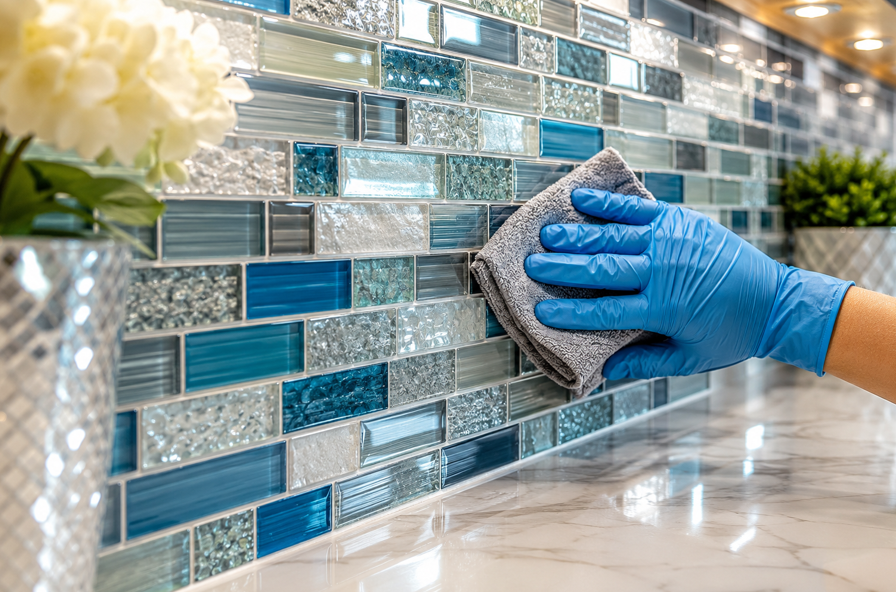
Glass tile can transform a kitchen backsplash, shower wall, bathroom accent, or decorative feature by reflecting light and adding color and depth. In Northville homes, it works especially well in spaces where homeowners want a polished look without making the room feel heavy.
The challenge is that the grout surrounding beautiful glass tile can become more noticeable when it starts collecting cooking residue, soap film, mineral deposits, or everyday dirt. Clean glass beside discolored grout creates contrast for all the wrong reasons.
Fortunately, keeping glass tile grout looking fresh usually comes down to consistent light cleaning, using compatible products, managing moisture, and understanding the type of grout installed. You generally do not need an aggressive cleaning routine. In fact, harsh cleaners and abrasive tools can create more problems than they solve.
Homeowners comparing tile options and maintenance requirements can turn to Urban Floors for flooring and surface guidance, samples, and help selecting materials suited to their space.
The best grout-care routine is simple: remove buildup before it becomes stubborn, clean with products appropriate for both the grout and glass, dry moisture-prone areas when practical, and follow the grout manufacturer’s recommendations for sealing and deeper maintenance.
Why Glass Tile Grout Needs Regular Attention
Glass tile itself is relatively straightforward to maintain. Daltile recommends non-abrasive cleaning products designed for glass or tile and specifically cautions against abrasive tools such as scouring pads, steel wool, and sandpaper.
Grout is different.
The narrow joints between tiles can collect residue that may not be immediately obvious. Over time, those grout lines can begin to look dull even when the glass remains bright.
Kitchen Grout Faces Grease and Food Residue
A glass tile backsplash can sit directly behind ranges, sinks, coffee stations, and food-preparation areas.
Cooking oils can settle onto grout. Sauce splatters, steam, fingerprints, and food residue may also build up slowly. Because the glass is usually easy to wipe clean, homeowners sometimes clean the tile faces while overlooking the grout joints between them.
Eventually, the grout can look darker than it originally did.
Bathroom Grout Has Different Challenges
In bathrooms, the issue is more likely to be moisture, soap residue, body-care products, and mineral buildup.
Shower installations also remain wet for longer periods than most kitchen backsplashes. Good ventilation and routine cleaning therefore become especially useful.
Light-Colored Grout Makes Buildup Easier to See
White, cream, pale gray, and other light grout colors can create a crisp look around glass tile. The tradeoff is that discoloration becomes visible sooner.
That is not necessarily a reason to avoid light grout. It simply makes regular upkeep more worthwhile.
A few minutes of routine cleaning can be much easier than trying to restore grout after months of accumulated residue.
Start With a Gentle Routine for Glass Tile and Grout
One of the biggest mistakes homeowners make is assuming stronger cleaner automatically means better cleaning.
Glass surfaces can show scratching, while grout needs products compatible with its composition. Start with the gentlest method suitable for the job and move to specialized products only when the buildup calls for them.
Remove Loose Surface Dirt First
Before wet cleaning, remove loose dust, crumbs, hair, or other debris.
For a backsplash, that may mean a quick wipe with a clean microfiber cloth. In a tiled bathroom, it may involve removing loose debris from ledges and surrounding surfaces before applying cleaner.
This prevents particles from being dragged repeatedly across the glass.
Choose a Non-Abrasive Cleaner
For the glass itself, use a non-abrasive cleaning product approved for glass or tile. Daltile specifically recommends non-abrasive products for routine glass-tile care.
When cleaning the grout and tile together, check that the product is compatible with both surfaces.
CUSTOM Building Products, for example, offers non-acidic, non-abrasive tile-and-grout cleaners intended to remove common buildup such as grease, food residue, dirt, and soap scum from grout, tile, and glass.
The lesson is more important than the individual product: match the cleaner to the installation rather than reaching for the strongest bottle in the cabinet.
Use Soft Cleaning Tools
A microfiber cloth or another soft, manufacturer-approved tool is a safer starting point for glass.
If grout lines need additional attention, use a grout-cleaning brush with a suitable bristle stiffness and work carefully along the joint rather than aggressively scrubbing the glass.
Avoid steel wool and other highly abrasive materials.
Rinse Away Cleaner Residue
Cleaner left on the surface can contribute to streaking or residue.
After cleaning, follow the product directions for rinsing. Where appropriate, wipe the glass with clean water and dry it with a soft cloth.
That final drying step is especially useful on reflective glass tile because it helps prevent spots from diminishing the shine.
Know What Type of Grout You Have
Not all grout requires exactly the same maintenance.
Before sealing, deep-cleaning, or attempting stain removal, identify whether the installation uses cement-based grout, epoxy grout, or another grout system.
Cement-Based Grout
Traditional cementitious grout is more porous than glass tile itself.
Depending on the product, a penetrating sealer may be recommended to help reduce staining and make future cleaning easier. MAPEI recommends sealing porous cement-based grout where appropriate and notes that the specific curing period needs to follow the grout and sealer manufacturer’s instructions.
LATICRETE similarly states that its cement-based grouts typically need to cure before an appropriate sealer is applied, with the exact timing dependent on the products being used.
Do not apply a generic sealing schedule to every installation. Product instructions take priority.
Epoxy Grout
Epoxy grout behaves differently because it has very low absorption.
LATICRETE states that its epoxy grouts do not require sealing because of their low absorption rate.
That does not mean epoxy grout never needs cleaning. It can still develop surface residue and requires routine care.
If You Do Not Know the Grout Type
Do not guess before applying a sealer or specialty chemical.
Check any installation paperwork you have, ask the installer, or speak with a flooring and tile specialist who can help you narrow down what was likely used.
Knowing the grout type helps you choose maintenance products more confidently.
How to Keep Kitchen Backsplash Grout Looking Fresh
Glass backsplashes are one of the most natural places to use glass tile flooring, despite the category name also covering glass tile products used on walls and decorative surfaces.
The reflective surface can make a Northville kitchen feel brighter, but backsplash grout sits in one of the busiest zones in the room.
Wipe Cooking Splashes Before They Set
Tomato sauce, oils, coffee, and other kitchen residue become easier to manage when they are addressed early.
If you notice a splash while cleaning the counter after dinner, deal with it then rather than letting it dry repeatedly onto the grout.
That small habit limits the need for stronger cleaning later.
Pay Attention Around the Range
The grout directly behind or near a range may collect a thin film of airborne cooking grease.
It can happen gradually enough that homeowners do not notice until the grout beside another section looks noticeably lighter.
Include the range backsplash in regular kitchen cleaning rather than waiting until the grout looks stained.
Do Not Forget the Sink Area
Water splashes around the sink can carry soap, food residue, or minerals.
Wipe both the tile and grout and dry the area when practical, especially if water regularly sits along a counter-to-backsplash junction.
Use the Right Cleaner for Grease
For more noticeable buildup, choose a tile-and-grout cleaning product intended to break down grease while remaining compatible with glass.
Avoid experimenting with strong acids, aggressive abrasives, or combinations of household chemicals. Manufacturer-approved cleaners provide a more predictable approach.
Caring for Glass Tile Grout in Bathrooms and Showers
Bathroom glass tile needs a slightly different routine because water exposure is frequent.
The goal is not to keep a shower perfectly dry at every moment. It is to reduce the amount of residue and persistent moisture that remains after regular use.
Rinse Away Soap Residue
Soap, shampoo, conditioners, and body products can leave film behind.
Regular rinsing and light cleaning prevent those layers from accumulating on the glass and grout.
Daltile notes that grout needs periodic cleaning because neither sealing nor grout type completely eliminates surface buildup or discoloration.
Encourage the Shower to Dry
Use the bathroom exhaust fan as intended and give moisture a chance to leave the room.
If practical, wiping or squeegeeing tiled surfaces after showering can reduce water droplets and residue. This is particularly useful on glass because dried water spots can interfere with its reflective appearance.
Watch Corners and Changes of Plane
The joints where walls meet one another, or where a tiled wall meets another surface, may use flexible sealant rather than ordinary grout.
LATICRETE explains that appropriate flexible sealant is used at changes of plane and where tile meets restraining or dissimilar surfaces so movement can be accommodated.
If these joints crack, separate, or deteriorate, cleaning alone will not fix the issue. They may require professional evaluation and replacement.
Does Glass Tile Grout Need to Be Sealed?
Sometimes, but not always.
Sealing depends largely on the grout product rather than on the fact that the surrounding tile is glass.
Cement Grout May Benefit From Sealing
A suitable penetrating sealer can help cement-based grout resist common staining and make maintenance easier.
CUSTOM Building Products describes grout sealer as a penetrating product that protects cement grout against common household contaminants such as grease, coffee, cooking oil, juices, and everyday dirt.
However, sealing does not make grout self-cleaning.
Dirt can still collect on the surface, so routine care remains necessary.
Epoxy Grout Usually Does Not Need a Sealer
If the installation uses epoxy grout, adding sealer may be unnecessary. As noted earlier, manufacturers such as LATICRETE specifically state that their epoxy grout does not need sealing.
Resealing Is Product-Specific
There is no reliable universal schedule such as “seal every year” that applies to every grout, sealer, installation, and household.
Check the sealer manufacturer’s instructions and pay attention to how the grout responds over time.
When in doubt, get product-specific advice rather than repeatedly adding coatings.
How to Handle Stubborn Grout Discoloration
Routine cleaning will manage most everyday buildup, but older grout sometimes needs more attention.
First Determine Whether It Is Dirt or Permanent Discoloration
Grout can look darker because of grease, soap residue, mineral buildup, or ground-in dirt. It can also change appearance because of staining or other installation-related conditions.
Start with an appropriate grout cleaner and follow its dwell-time and rinsing directions.
Do not jump straight to aggressive chemicals.
Use Specialized Products for Deeper Cleaning
Professional-strength grout cleaners are available for accumulated grease, soap scum, and other deposits. Daltile recommends choosing cleaning products suited to the type of buildup and following grout-manufacturer care instructions.
Always check compatibility with the glass tile as well.
Avoid Improvised Acid Cleaning
Internet cleaning advice often recommends acidic household products for almost every tile problem.
That approach can be risky because grout, sealers, surrounding stone, metal trims, and other materials may react differently.
Use a product designed for the specific surface and problem, and test it in an inconspicuous spot when the manufacturer recommends doing so.
Know When Cleaning Is No Longer Enough
If grout remains heavily discolored after appropriate cleaning, or if joints are cracked, crumbling, or missing material, the issue may require restoration rather than another round of scrubbing.
Professional regrouting, grout color restoration, or repair may be more effective than repeatedly attacking damaged joints with stronger cleaners.
Common Grout-Care Mistakes to Avoid
Keeping glass tile attractive is often as much about what you do not do as what you do.
Avoid habits such as:
Scrubbing glass with steel wool or harsh abrasive pads
Assuming every grout needs the same sealer
Using steam simply because a surface is tiled
Leaving cooking grease to accumulate for months
Ignoring persistent moisture in bathroom corners
Mixing household cleaning chemicals
Using strong acidic products without confirming compatibility
Treating cracked grout as a cleaning problem
Applying more sealer without knowing what is already on the grout
Cleaning only the glass while overlooking the grout lines
Consistency beats intensity. A light routine performed regularly is usually more practical than waiting until the grout requires major restoration.
A Simple Grout-Care Routine for Northville Homes
You do not need an elaborate maintenance calendar.
After Everyday Messes
Wipe cooking spills, food residue, soap, and obvious moisture promptly.
During Regular Cleaning
Clean the glass and grout with a compatible non-abrasive product, paying extra attention to backsplash areas near the range and shower areas that collect soap residue.
Periodically
Look closely at grout lines for:
Persistent discoloration
Cracking
Missing grout
Failed sealant at corners
Areas that remain damp
Stains that no longer respond to routine cleaning
When Maintenance Needs Change
Verify the grout type before resealing or using a stronger product.
If you are unsure whether you have cement, epoxy, or another grout system, professional guidance can prevent unnecessary treatments.
Keep the Grout as Beautiful as the Glass
Glass tile draws attention because it catches light, introduces color, and gives kitchens and bathrooms a clean, finished appearance. The grout surrounding it plays a quieter role, but it has a major effect on how polished the entire installation looks.
For Northville homeowners, the best maintenance approach is refreshingly straightforward. Clean spills early. Use non-abrasive products compatible with glass and grout. Keep grease and soap residue from building up. Manage bathroom moisture. Seal cementitious grout when the specific product calls for it, and do not assume epoxy grout requires the same treatment.
Most importantly, respond to what the grout is telling you. Surface dirt calls for cleaning. A worn sealer may call for maintenance. Cracking or missing material may call for repair.
Glass tile does not need an aggressive maintenance routine to stay beautiful. It needs the right one.
If you are considering glass tile for a Northville kitchen, bathroom, or decorative feature and want help comparing styles and care requirements, get in touch with the Urban Floors team for personalized guidance.


